Top-Rated Hospitality CV Examples in Your Area
Last updated on 10 April, 2026

Danuta DetynaWriter, Professional Association of Resume Writers and Career Coaches (PARWCC)
Our customers have been hired by*:
Hospitality CV examples
A good hospitality CV proves that you can impress guests, support your team, and enhance every experience. It should highlight the key qualities valued in hospitality: the ability to deliver seamless service and maintain a welcoming environment for all visitors.
This guide will assist you in writiting a CV for the hospitality industry step-by-step.
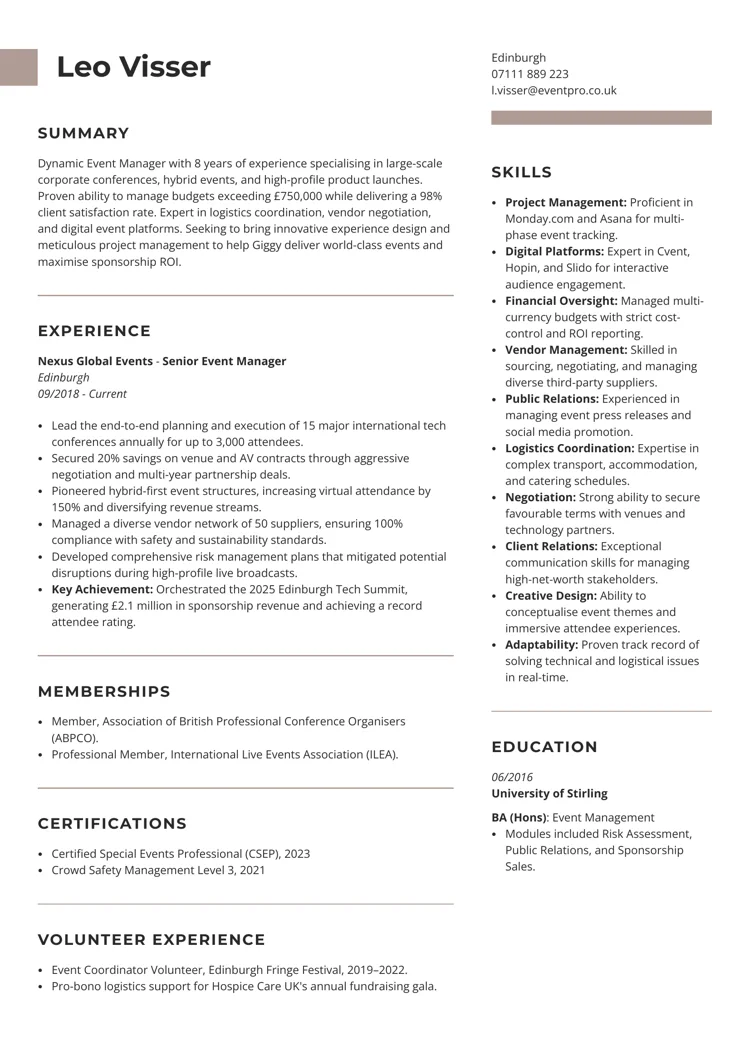
Hospitality CV example for event manager jobs
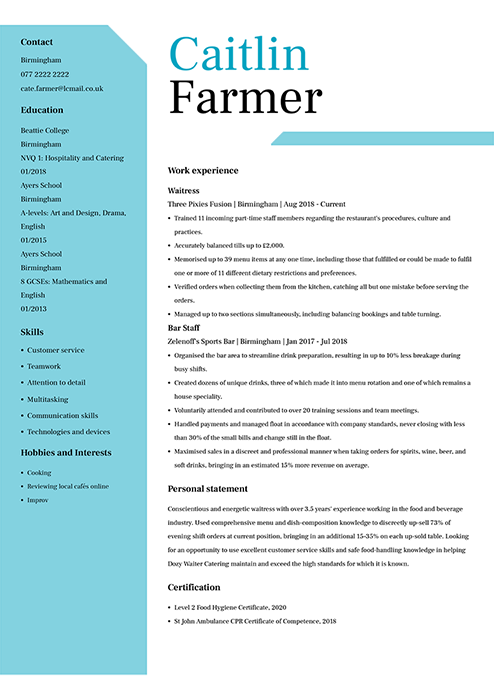
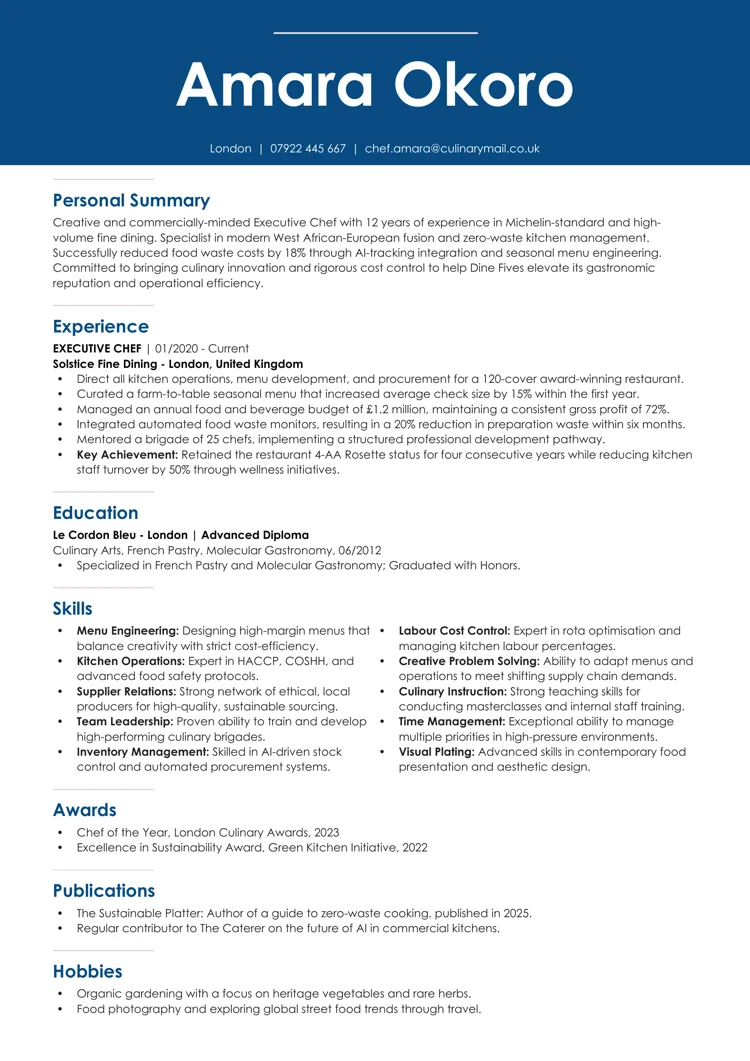
Hospitality CV example for chef jobs
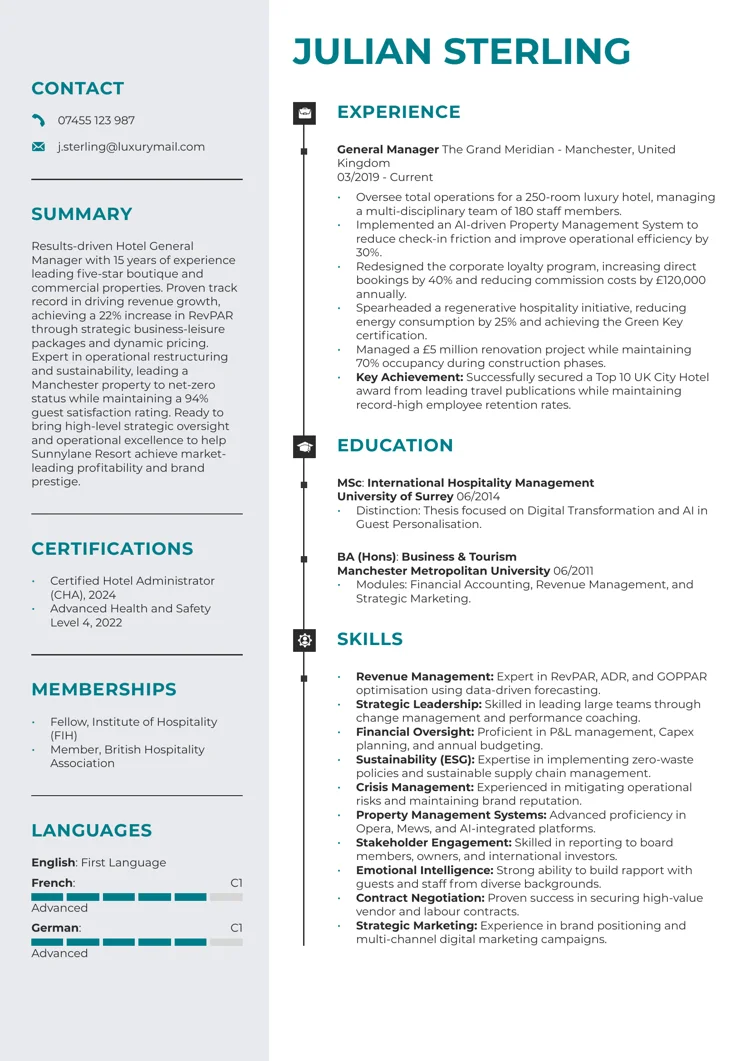
Hospitality CV example for hotel managers
Need more CV examples?
See our other CV examples for hospitality jobs, including:
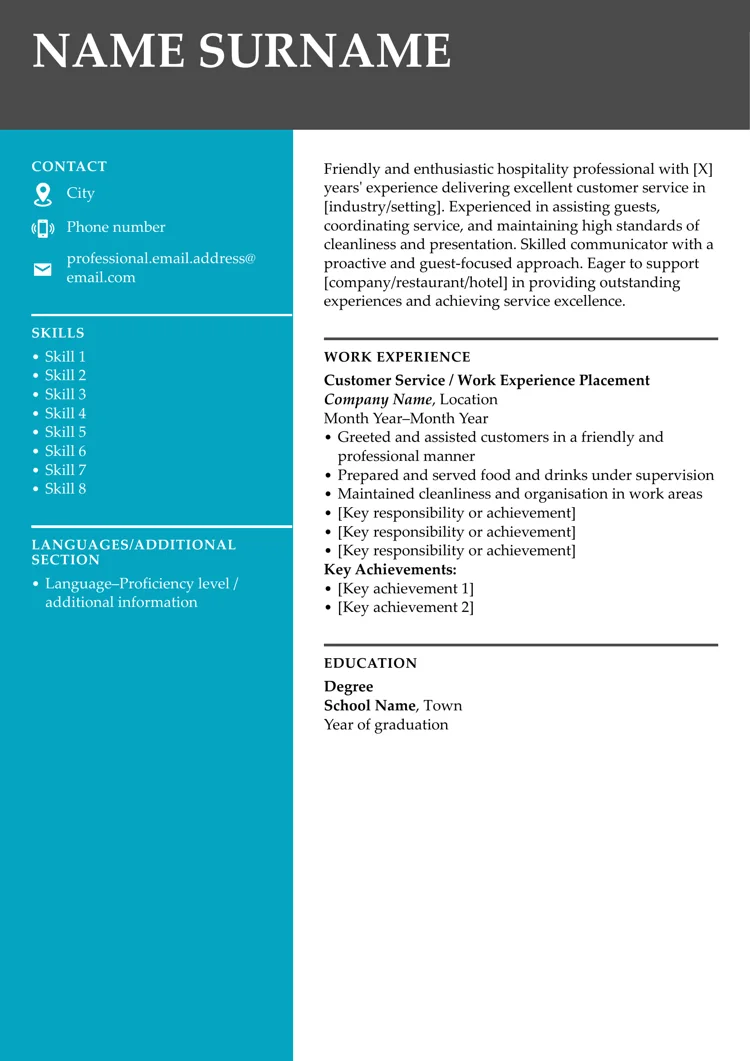
Hospitality CV template (copy & customise)
Example
Name Surname
Job Title
City, UK
Phone number
Professional email address
Profile
Friendly and enthusiastic hospitality professional with [X] years’ experience delivering excellent customer service in [industry/setting]. Experienced in assisting guests, coordinating service, and maintaining high standards of cleanliness and presentation. Skilled communicator with a proactive and guest-focused approach. Eager to support [company/restaurant/hotel] in providing outstanding experiences and achieving service excellence.
Work Experience
Customer Service / Work Experience Placement
Company Name, Location
Month Year–Month Year
- Greeted and assisted customers in a friendly and professional manner
- Prepared and served food and drinks under supervision
- Maintained cleanliness and organisation in work areas
- [Key responsibility or achievement]
- [Key responsibility or achievement]
- [Key responsibility or achievement]
Key Achievements:
- [Key achievement 1]
- [Key achievement 2]
Education
Degree
School Name, Town
Year of graduation
Skills
- Skill 1
- Skill 2
- Skill 3
- Skill 4
- Skill 5
- Skill 6
- Skill 7
- Skill 8
Languages/Additional section
- Language–Proficiency level / additional information
Simply copy and customise this hospitality CV template using my tips on writing a CV below.
How to write a hospitality CV
A position in hospitality is about creating memorable experiences. To secure a role in a premier hotel or restaurant, your application must demonstrate both service excellence and operational efficiency. Let’s explore how to craft a perfect CV for hospitality.
1. Tailor your hospitality CV to the industry
First, learn about current hospitality trends so you can anticipate staffing needs of the venues you’re targeting.
- While broader UK vacancies have cooled, the Office for National Statistics (ONS) January 2026 report shows that service-driven sectors remain a primary employer, with 726,000 active vacancies across the UK.
- With the National Living Wage rising to £12.71 in April 2026, employers are becoming increasingly selective.
- The UK hospitality sector employed around 2.6 million people in 2025, representing about 7% of all UK jobs. This makes hospitality the 6th largest employment sector in the UK.
Aim to create a hospitality CV that shows you’re organised — it will help you present your strengths without distractions. Use classic CV sections, such as professional profile, work experience, education, and skills. You can list additional sections to enhance impact, such as certifications, professional memberships, volunteer work, or languages you speak.
Make sure to:
- Choose a common UK CV format
- Find a professional CV template or make one yourself
- Highlight personal details at the top of your CV
- Ensure your CV is one page long
- Use headings and bullet points for better readability
- Make every piece of information relevant to your potential employer.
2. Highlight relevant experience on your hospitality CV
Service impact is the main metric UK managers use to assess hospitality staff. That’s why you should emphasise your ability to create a positive environment for customers. If you have limited or no experience, list relevant activities from volunteering or customer-facing internships that showcase pressure management and guest handling.
Construct your hospitality experience section as follows:
- Begin with your most recent venue or current role.
- State the company’s name, its location, and the specific scale of the operation.
- List your employment or placement dates using months and years.
- Utilise active action verbs to describe your accomplishments.
- Include at least one data-supported achievement per role for greater impact.
- Add 4–6 concise bullet points to each position to ensure readability.
Know your competition
An average hospitality CV:
- List 3+ jobs
- Is over 2 pages long
- Has 729 words
* Based on over 3 million resumes created in LiveCareer UK CV builder in 2025
3. Prioritise your hospitality service competencies
Hospitality teams look for a blend of speed and administrative attention. To secure an interview in the UK hospitality sector, show you’ve got all the necessary professional abilities, for example:
- Active listening
- Administrative skills
- Communication skills
- Decision-making skills
- Digital skills
- Interpersonal skills
- Leadership skills
- Organisational skills
- Problem-solving skills
- Time management skills
Tailor the skill list in your hospitality CV to the venue’s needs. For example, a barista should emphasise speed of service, while a fine-dining server should focus on wine pairing and menu knowledge.
To present your qualities in the best light, weave these competencies naturally throughout your entire application:
- Create a personal statement including 2–3 skills that were mentioned in the job ad.
- Emphasise particular skills in your CV descriptions.
- Include a short explanation for each skill to add more context.
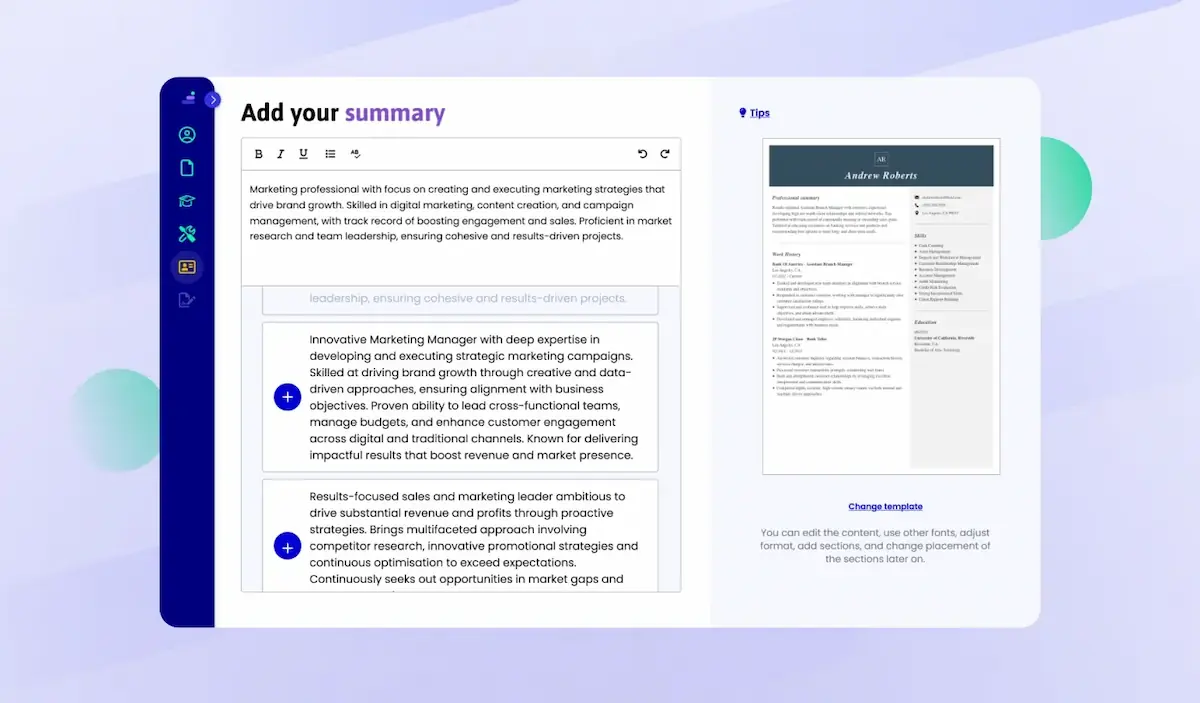
A strong CV summary will convince the recruiter you’re the perfect candidate. Save time and choose a ready-made personal statement written by career experts and adjust it to your needs in the LiveCareer CV builder.
4. Go the extra mile in your hospitality CV
A hospitality CV requires your educational background. It is important to employers because it shows your fundamental understanding of compliance and service standards.
- Start with the highest educational qualification
- Include the name of the institution and the year of graduation.
If you’re only starting your career in hospitality, use this section to highlight your strengths. You can do this by mentioning:
- Relevant courses
- Extracurricular activities
- Academic achievements and awards
- Memberships in relevant student organisations
Once your main content is complete, it’s time to add sections that make your hospitality CV more distinctive.
Choose 2–3:
- Awards & honours: Highlight accolades like “Employee of the Month” to provide external validation of your service excellence.
- Certifications & training: List essential CPD, such as Level 2 Food Safety, Personal Licence (APLH), or First Aid.
- Professional memberships: Mention affiliations with organisations such as the Institute of Hospitality to demonstrate commitment to the industry.
- Language skills: Detail your proficiency in additional languages, a significant asset for supporting international guests in UK hubs.
- Projects & initiatives: Showcase leadership in venue-wide programmes, such as sustainability drives or new menu launches.
- Volunteer work: Document event-related volunteering to highlight your dedication to service outside of a formal contract.
- Hobbies & interests: Focus on passions like mixology or food blogging that help you contribute to the broader team culture.
5. Ensure your hospitality CV appears impressive to both humans and AI
While the content matters, the visual aspect of your application is equally important. A well-designed hospitality CV template should be both modern and easy to read.
Here’s how to create your hospitality CV template:
- Use 1-inch margins on all sides.
- Choose the right CV font: Arial, Calibri, Georgia, Times New Roman, etc.
- Set 10–12 pt font size for descriptions
- Set 13–14 pt for section headings
- Align contents to the left
- Keep 1–1.15 line spacing
- Avoid unnecessary visuals and too much colour.
A strong hospitality CV should easily pass AI or ATS screening. Keep in mind that applications are rejected if they lack specific qualifications. These are usually mentioned in the job ad, so pay extra attention to it. Learn more: how to make an ATS-friendly CV.
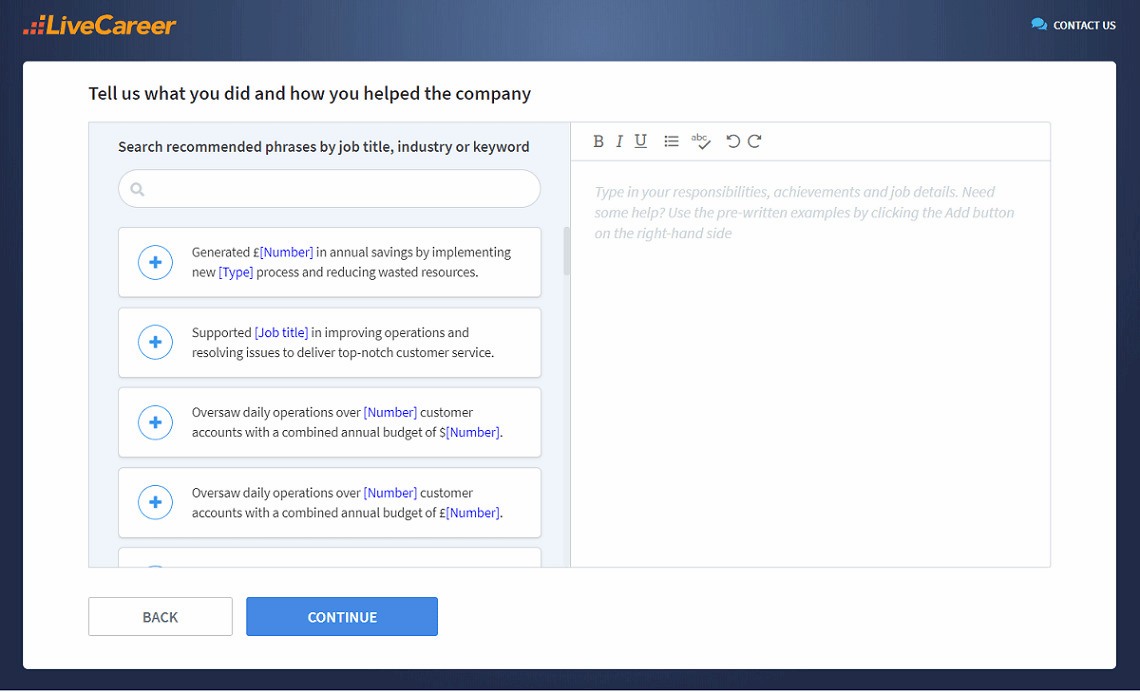
You don’t have to be a CV writing expert. In the LiveCareer CV builder you’ll find ready-made content for every industry and position, which you can then add with a single click.
Frequently Asked Questions about UK teaching CVs
What should be included in a hospitality CV?
A strong hospitality CV should highlight customer service skills, teamwork, and experience in fast-paced environments. Include details about previous roles, key responsibilities, and achievements, such as improving guest satisfaction or managing busy service periods. Reviewing a hospitality CV example can help you understand how to structure your information clearly.
How do I write a CV for hospitality with little experience?
When you’re writing a CV for hospitality with no experience, mention any part-time work, volunteering, or school activities that involve teamwork or customer interaction. Entry-level hospitality CVs often highlight transferable skills, such as communication, time management, and problem-solving.
How to format a CV template for hospitality jobs?
A typical hospitality CV template includes a professional summary, work experience, key skills, and education. Use clear headings and concise bullet points to keep the document easy to read.
Final take
A strong hospitality CV is crucial for landing top service or leadership roles in 2026. You can save some time with LiveCareer CV builder, which will help you create the perfect CV fast.
How we review the content at LiveCareer
Our editorial team has reviewed this article for compliance with LiveCareer’s editorial guidelines. It’s to ensure that our expert advice and recommendations are consistent across all our career guides and align with current CV and cover letter writing standards and trends. We’re trusted by over 10 million job seekers, supporting them on their way to finding their dream job. Each article is preceded by research and scrutiny to ensure our content responds to current market trends and demand.
Sources
About the author
Danuta Detyna
Danuta Detyna is a Certified Professional Résumé Writer and career expert with over nine years of writing experience. Known for her empathetic, detail-oriented approach, she creates practical and empowering career resources that help job seekers move forward with confidence.
Looking for a job-winning CV?
Crafting a job-winning CV is all about showcasing your unique skills and experiences. Start with a strong personal statement that highlights your career goals and achievements.
Try Our CV Builder Now