Dentist CV: UK Template, Example, & Writing Guide
Last updated on 29 December, 2025

Patrycja MazurczakWriter, Professional Association of Resume Writers and Career Coaches (PARWCC)
Our customers have been hired by*:
It takes a very specific set of skills to become a dentist—not to mention years of study and professional practice. Between that and the severe dentist shortage in the UK, finding a decent job should be easy enough.
But as it happens, it’s not uncommon to send out one application after another and never hear back. With this guide, you’ll learn how to write a dentist CV that won’t get ignored.
This guide will show you:
- How to write a dentist CV that gets you the job.
- Ready-to-use dentist CV template.
- Tips on how to make your dental CV shine.
- Example of a dentistry CV so you can get inspired.
Create an effective CV in minutes. Choose a professional CV template and fill in every section of your CV in a flash using ready-made content and expert tips.
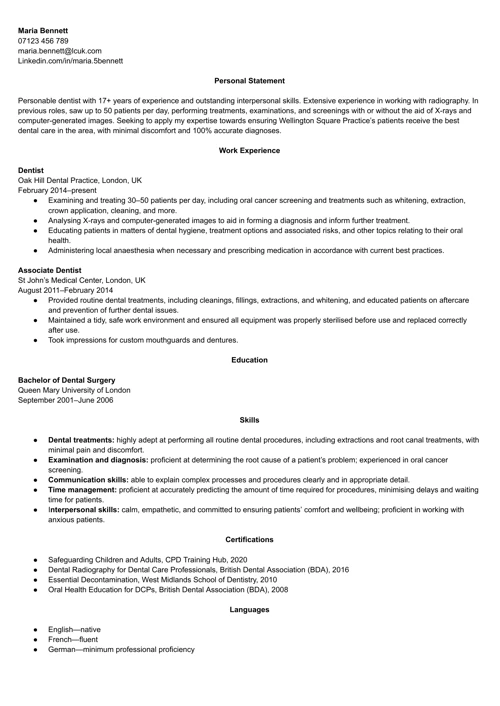
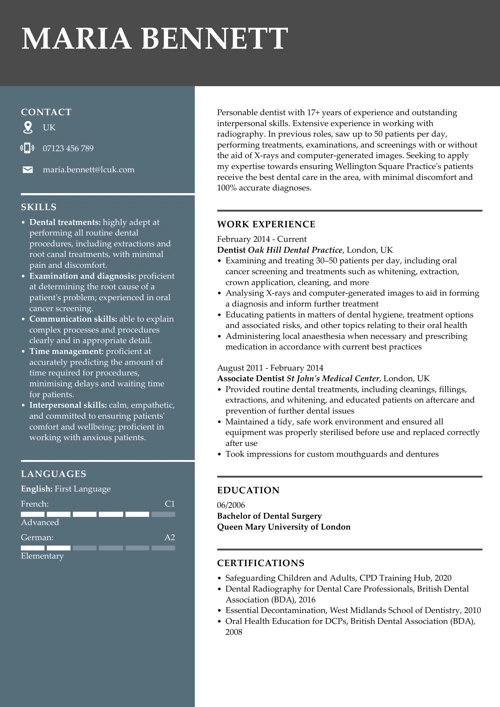
We created the sample on the left using our builder. See other good CV examples like this one.
Not quite what you’re looking for? Here’s a selection of our other CV guides, each with its own dedicated sample:
- Medical CV example
- Biomedical science CV example
- Nursing CV example
- Pharmacist CV example
- PhD CV example
Check the full list of our CV samples for every industry here.
Dentist CV template
Example
Maria Bennett
07123 456 789
maria.bennett@lcuk.com
Linkedin.com/in/maria.5bennett
Personal Statement
Personable dentist with 17+ years of experience and outstanding interpersonal skills. Extensive experience in working with radiography. In previous roles, saw up to 50 patients per day, performing treatments, examinations, and screenings with or without the aid of X-rays and computer-generated images. Seeking to apply my expertise towards ensuring Wellington Square Practice’s patients receive the best dental care in the area, with minimal discomfort and 100% accurate diagnoses.
Work Experience
Dentist
Oak Hill Dental Practice, London, UK
February 2014–present
- Examining and treating 30–50 patients per day, including oral cancer screening and treatments such as whitening, extraction, crown application, cleaning, and more.
- Analysing X-rays and computer-generated images to aid in forming a diagnosis and inform further treatment.
- Educating patients in matters of dental hygiene, treatment options and associated risks, and other topics relating to their oral health.
- Administering local anaesthesia when necessary and prescribing medication in accordance with current best practices.
Associate Dentist
St John’s Medical Center, London, UK
August 2011–February 2014
- Provided routine dental treatments, including cleanings, fillings, extractions, and whitening, and educated patients on aftercare and prevention of further dental issues.
- Maintained a tidy, safe work environment and ensured all equipment was properly sterilised before use and replaced correctly after use.
- Took impressions for custom mouthguards and dentures.
Education
Bachelor of Dental Surgery
Queen Mary University of London
September 2001–June 2006
Skills
- Dental treatments: highly adept at performing all routine dental procedures, including extractions and root canal treatments, with minimal pain and discomfort.
- Examination and diagnosis: proficient at determining the root cause of a patient’s problem; experienced in oral cancer screening.
- Communication skills: able to explain complex processes and procedures clearly and in appropriate detail.
- Time management: proficient at accurately predicting the amount of time required for procedures, minimising delays and waiting time for patients.
- Interpersonal skills: calm, empathetic, and committed to ensuring patients’ comfort and wellbeing; proficient in working with anxious patients.
Certifications
- Safeguarding Children and Adults, CPD Training Hub, 2020
- Dental Radiography for Dental Care Professionals, British Dental Association (BDA), 2016
- Essential Decontamination, West Midlands School of Dentistry, 2010
- Oral Health Education for DCPs, British Dental Association (BDA), 2008
Languages
- English—native
- French—fluent
- German—minimum professional proficiency
Here’s how to write a dentist CV:
1. Open your dentist CV with a compelling personal statement
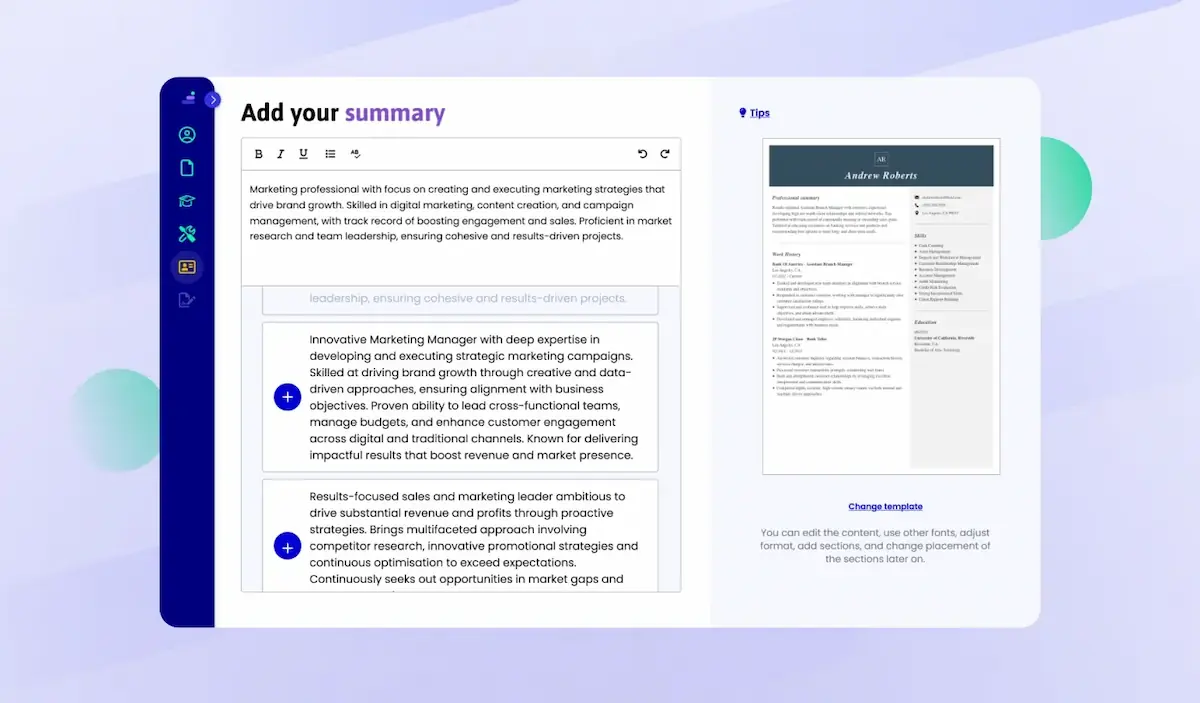
The personal statement paragraph on a CV is essentially an introduction that summarises the most relevant information from your application. It should let the reader know, at a glance, what makes you the ideal candidate for the role.
The best way to structure this CV summary is to answer the following questions:
- Who are you? Mention your job title and years of experience, plus a couple of your strongest skills.
- What can you offer to the employer? Outline how your skills can become an asset to the practice or organisation.
- What are your most relevant professional achievements? Briefly describe the highlights of your career so far.
If you’re writing a dentist CV with no experience, you’ll want to write a CV objective instead. It’s a type of personal statement used by recent graduates and those who are changing careers. Follow the same general outline, but focus on transferable skills and accomplishments from your studies.
A strong CV summary will convince the recruiter you’re the perfect candidate. Save time and choose a ready-made personal statement written by career experts and adjust it to your needs in the LiveCareer CV builder.
2. Describe your work experience on your dental CV
A strong CV work experience section should be concise, complete, and most importantly, targeted to the job at hand.
Start by making an outline for your CV: list your jobs, starting with the current or most recent one and working your way back in reverse-chronological order. (This type of CV structure is actually called reverse-chronological CV.) For each job, remember to mention your job title, the name of the employer, and your dates of employment.
Then, write up to 6 bullet points per job, focusing on adding specific professional achievements to your CV. Rather than writing about responsibilities, aim to describe your performance and successes. Starting each bullet with an impactful verb will help, as will including numbers where possible.
As for targeting your dental CV for the position, the best way to do this is to analyse the job advertisement first. Look for specific skills the employer requires, and then build your bullet points around proving you have the necessary skills.
3. Provide information about your education
Including an education section on a CV is important for any job, but doubly so for medical professions. This doesn’t mean it’s difficult, however: all you need to do in this section is to name your degree, university, and years of attendance.
If you’re a recent graduate, you may also want to include your A-levels to provide a complete picture of your schooling. The same level of detail is required here: state what subjects you studied, where, and when.
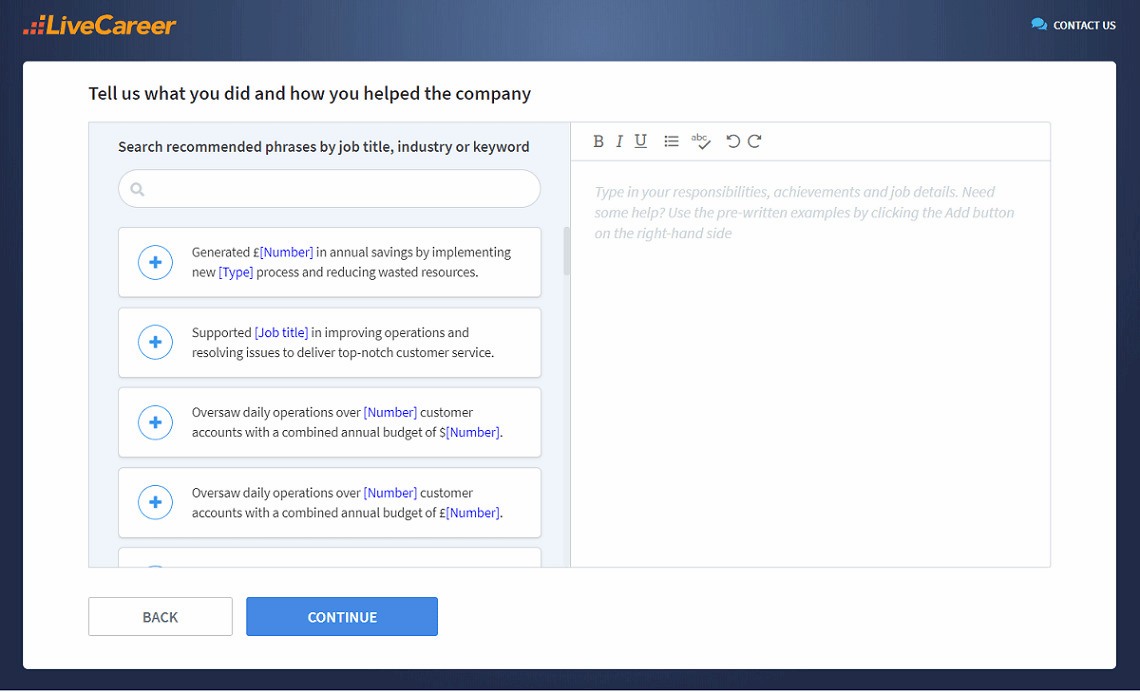
You don’t have to be a CV writing expert. In the LiveCareer CV builder you’ll find ready-made content for every industry and position, which you can then add with a single click.
4. List your key skills
Even the best education is no guarantee of advanced professional skills. Make your abilities clear to the employer by listing 4–8 of your most relevant, strongest skills on your CV. Refer to the job advertisement to guide your choices—you’ll want to focus on the skills that the employer lists as requirements.
For each skill, write a short explanatory sentence. Here’s an example:
Dentist CV skills example
- Dental treatments: highly adept at performing all routine dental procedures, including extractions and root canal treatments, with minimal pain and discomfort.
- Examination and diagnosis: proficient at determining the root cause of a patient’s problem; experienced in oral cancer screening.
- Communication skills: able to explain complex processes and procedures clearly and in appropriate detail.
- Time management: proficient at accurately predicting the amount of time required for procedures, minimising delays and waiting time for patients.
- Interpersonal skills: calm, empathetic, and committed to ensuring patients’ comfort and wellbeing; proficient in working with anxious patients.
5. Make your dentist CV stand out with the right additional sections
This is it for the obligatory parts of your dentistry CV—but you can still include a couple of additional sections to add value to your application and highlight your strengths.
Here’s what else you can include in your CV:
- Certifications and licences, including CPD certificates
- Foreign languages you can speak at any level (make it clear whether you’re fluent)
- Memberships in professional associations and your activities there (e.g. attending or leading webinars, conferences)
- Volunteering experience and activities
As for listing your interests in a CV, it’s only beneficial if they’re directly relevant to your job. For instance, an interest in radiography or emerging technology in medicine can contribute value to your application (depending on the role and employer), as opposed to generic hobbies and pastimes.
6. Write a cover letter that’s targeted to the employer
Before you hit send on your application, remember to write a cover letter that draws attention to your most important and relevant experience. Your document should follow the expected cover letter format, with a business-style heading and left-aligned text written in the same font as your CV.
Start your cover letter with an introduction to your experience and successes to catch the reader’s attention. Follow with more detail about your most relevant experience, writing directly about how it makes you the ideal candidate for the job. Mention your motivation for wanting to join this particular practice or organisation, and end your cover letter with a call to action.
7. Follow these CV formatting tips and best practices
And here you are—turns out that writing your CV can be a pain-free procedure after all.
There’s one last thing to address, and that’s the formatting of your CV. Whether you use a pre-made blank CV template or start from scratch, make sure to:
- Pick a font for your CV that’s easy to read and professional-looking. Georgia or Arial would be among the best choices for medical profession CVs.
- Include your personal details on your CV in a header that’s easy to spot at a glance.
- Give each section a clear heading to make your CV layout easier to navigate.
- Keep your CV length in check—one or two pages will be ideal.
- Avoid images or graphics, as they make a CV harder to process by automatic recruitment solutions that most companies use nowadays.
And that’s all there is to it! If you haven’t heard back from the employer a week after sending your CV and cover letter, follow up on your application to ensure they received it.
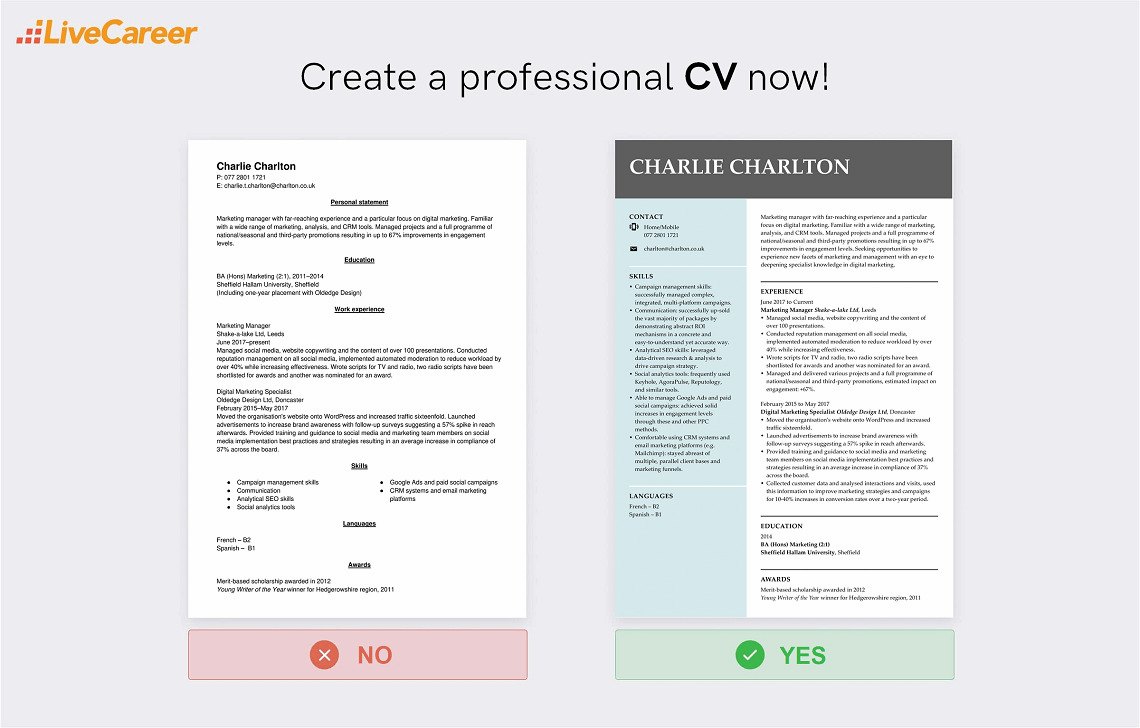
A cover letter alone simply won’t be enough—you need an impactful CV, too. Create your CV in minutes. Just follow our wizard and fill in every CV section with ready-made content. Get started by choosing a professional CV template.
Thanks for reading. We hope you enjoyed this guide and found the dentist CV sample up top helpful! If you have any questions or find yourself unsure about something to do with writing your dentist CV, don’t hesitate to let us know in the comments section below.
How we review the content at LiveCareer
Our editorial team has reviewed this article for compliance with Livecareer’s editorial guidelines. It’s to ensure that our expert advice and recommendations are consistent across all our career guides and align with current CV and cover letter writing standards and trends. We’re trusted by over 10 million job seekers, supporting them on their way to finding their dream job. Each article is preceded by research and scrutiny to ensure our content responds to current market trends and demand.
About the author
Patrycja Mazurczak
Patrycja is a career expert who specialises in helping you create compelling CVs and cover letters. With over 10 years of experience in content creation processes, she brings her expertise to the forefront of the industry.
Looking for a job-winning CV?
Crafting a job-winning CV is all about showcasing your unique skills and experiences. Start with a strong personal statement that highlights your career goals and achievements.
Try Our CV Builder Now