How to Make a Professional Portfolio to Add to Your CV
Last updated on 22 January, 2026


Maciej Staszek TomaszewiczWriter, Professional Association of Resume Writers and Career Coaches (PARWCC)
Reviewed by Roma KończakEditor & Writer, Certified Professional Résumé Writers and Career Coaches (PARWCC)
Our customers have been hired by*:
In today’s competitive job market, a professional portfolio can significantly boost your applications. While a CV outlines your skills and experience, a work portfolio offers concrete proof of your abilities and achievements. For careers in creative, tech, marketing, and other fields, a strong portfolio can make all the difference.
Whether you’re a creator, a marketing pro, a healthcare worker, or a representative of a different industry, this guide will help you build an impressive portfolio. I’ll cover choosing the right platform and selecting the best work to showcase, so your portfolio truly stands out.
Create an effective CV in minutes. Choose a professional CV template and fill in every section of your CV in a flash using ready-made content and expert tips.
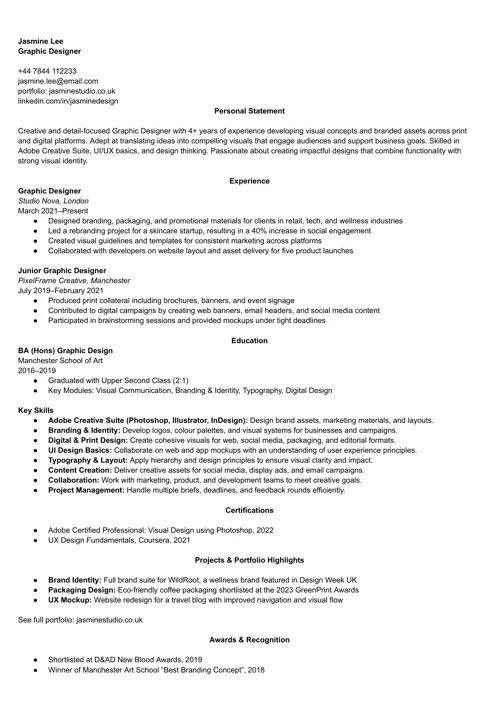
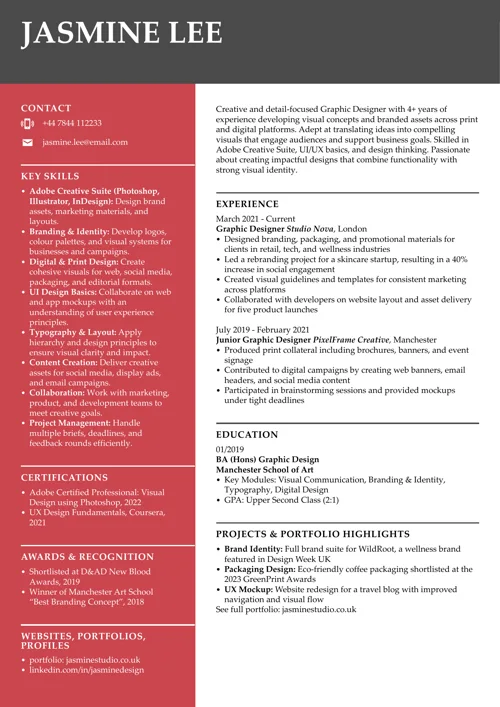
We created the sample on the left using our builder. See other good CV examples like this one.
Looking for more inspiration? Visit our guides:
- Creative CV Templates
- Best CV Models Approved by Experts
- Blank CV Templates for Any Job
- Best Fonts for a CV
- What Makes a Good CV
- Should You Use AI for CV Writing
- How to Write a Short Cover Letter
What is a professional portfolio?
A professional portfolio is a carefully selected collection of your finest work, showcasing your skills, expertise, and the value you offer. Unlike a CV, which often relies heavily on text, a portfolio allows your work to speak for itself through visual or interactive examples. It serves as an extension of your professional identity, providing tangible proof of your abilities.
Typically, a professional portfolio will include:
- Work samples: These can be case studies, design projects, writing samples, visual presentations, charts, reports, evaluations.
- Project descriptions: Brief write-ups or explanations of your work, outlining the problem, process, and outcome.
- Visual assets: High-quality images, photos, designs, videos, as well as awards and certificates that best represent your work.
- Bio section: A professional summary that provides a snapshot of who you are, what you do, and what you wish to achieve in your career.
- References: Written endorsements from your professional connections.
- CV: Link to or download a copy of your CV to give employers more insight into your qualifications.
Example
Remember: A portfolio complements your CV, not replaces it. It allows you to demonstrate to potential employers what you’re capable of.
Why should you create a professional portfolio?
A portfolio can be the deciding factor in whether you secure a job. While CVs outline your experience, work portfolios showcase your practical skills and hands-on expertise. In many industries, particularly in the creative, healthcare, and technology sectors, a well-organised portfolio is expected. Not having one could put you at a disadvantage.
Here’s why you should invest time in building a professional portfolio:
- It proves your skills. While a CV outlines your qualifications, a portfolio shows actual examples of your work, providing evidence of your capabilities.
- It makes you stand out. Many applicants only submit a CV, but a strong portfolio sets you apart from the competition. Employers are more likely to remember you if they can see your work in action.
- It helps build trust. A well-organised portfolio with clear results or client testimonials establishes your credibility and gives employers confidence in your abilities.
- It gives context. A portfolio allows you to explain the impact of your work in greater detail, which a CV might not fully convey. You can explain the challenges you faced, the solutions you implemented, and the results you achieved.
- It demonstrates versatility. A portfolio allows you to display a range of skills and projects, showing potential employers that you’re adaptable and capable of working in diverse contexts.
- It supports interviews. During a job interview, you can refer to your portfolio to back up your answers, providing concrete examples of how you’ve achieved success in the past.
In today’s digital age, where first impressions are often formed online, having a professional portfolio is one of the most effective ways to demonstrate to employers what you can contribute to the role.
Who should create a work portfolio?
While portfolios are most often linked to creative fields, they are valuable in many other professions. Any role that involves creating, managing, or designing tangible work should have a portfolio to highlight your skills. It is especially helpful for those whose work can be shown visually or interactively.
Consider creating a portfolio if you work in any of the following fields:
- Creative industries, such as graphic designers, illustrators, photographers, video editors, and animators, can benefit from a portfolio that visually presents their work.
- Tech and development specialists, such as web developers, software developers, data scientists, and UX designers, should use a portfolio to demonstrate coding skills, project outcomes, and technical expertise.
- Marketing jobs and communications professionals, including content creators, social media managers, SEO specialists, and brand strategists, can utilise a portfolio to showcase campaign results, content creation, and digital strategies.
- Healthcare professionals: they demonstrate your professional skills, present appraisals and feedback from supervisors, and serve as proof of your professional development.
- Consulting positions and freelancing jobs: for independent professionals, a portfolio is essential for showcasing client work, case studies, and testimonials.
- Writers, copywriters, and journalists should also have a portfolio that includes samples of articles, blog posts, reports, and other published works.
Even if your role isn’t directly “creative,” a portfolio helps you showcase your talent with visual aids like reports, case studies, or presentations, which can be incredibly helpful.
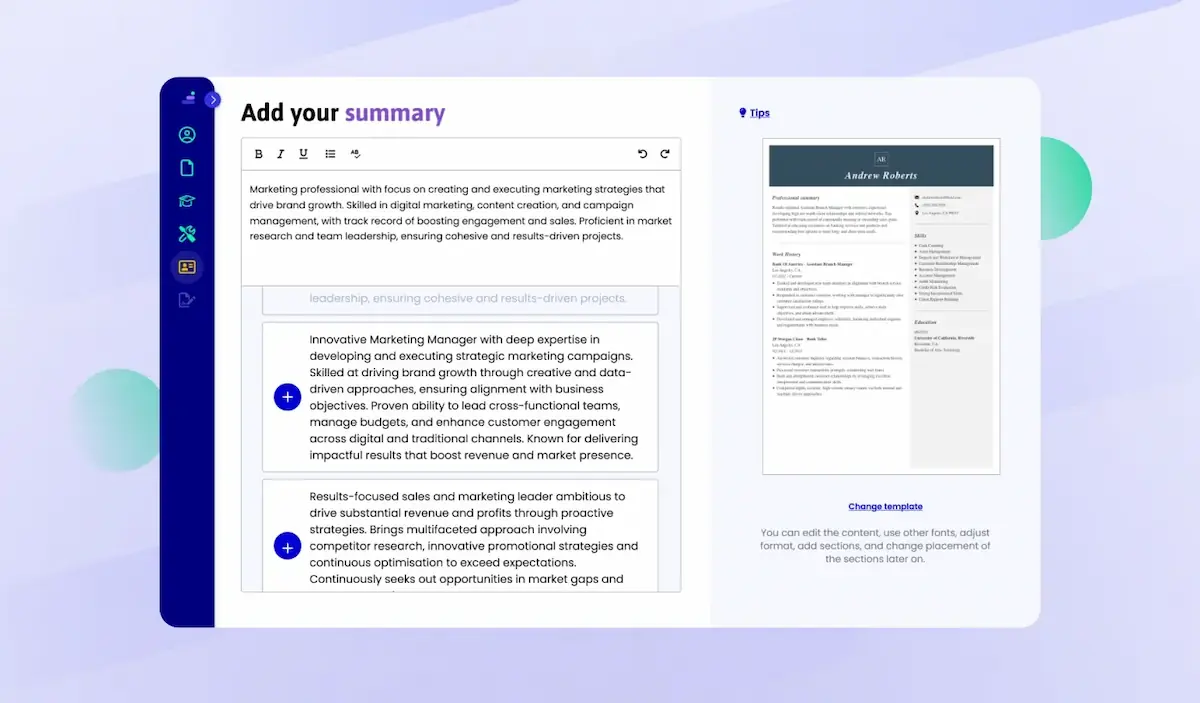
A strong CV summary will convince the recruiter you’re the perfect candidate. Save time and choose a ready-made personal statement written by career experts and adjust it to your needs in the LiveCareer CV builder.
How to make a professional work portfolio
Creating a professional portfolio, just like writing a good CV, doesn’t need to be complicated. The key is to curate and present your work clearly and effectively, using a platform that suits your field and personal style.
Here’s how to make a strong portfolio:
1. Select your best work
Focus on showcasing your work experience in a way that reflects the quality of your key skills and qualifications. Choose projects and achievements that demonstrate your versatility, creativity, and problem-solving abilities.
Avoid overwhelming your audience with too much content. Highlight your best work instead, and for each project or role, offer a brief explanation of your role, the challenges you faced, and the outcome of the project. This helps employers understand the impact of your work.
2. Write a compelling bio
Your professional introduction is an essential part of your portfolio. It should clearly communicate who you are, what you do, and what sets you apart. Keep it concise but personable, and let your personality shine through.
Here’s how to do it right:
- Share your name, your job title, and your expertise.
- Explain what you’re passionate about and what you can offer.
- Share a fun fact or your professional motto to make it relatable.
3. Organise your work clearly
Structure your portfolio in an easy-to-navigate way. Group similar projects together and ensure the layout is user-friendly. Whether it’s “Web Development”, “Brand Design”, or “Professional Development,” categorise your work to make it easier for potential employers to find relevant examples.
tutaj
Remember: clarity is the key. Keep your design clean and straightforward. Your portfolio should be easy to skim, with work samples easily accessible.
4. Add contact information
Include a section where potential employers can contact you directly. Offer multiple contact options: provide an email link, a contact form, or a scheduling tool for prospective clients or employers. Also, consider adding links to your professional LinkedIn profile or other relevant social media platforms. The easier it is to reach you, the better.
5. Link your CV
Your portfolio should complement your CV, so ensure you provide a link to it or a downloadable PDF version for easy access. This allows employers to quickly review your full qualifications while also exploring your work.
What platforms should you use for your professional portfolio?
Building an online portfolio doesn’t require advanced web development skills, thanks to several platforms designed to make the process quick and simple. Here are some of the best options:
General portfolio platforms:
- Wix: A drag-and-drop builder perfect for those seeking a straightforward yet professional-looking portfolio. Provides a range of templates.
- Squarespace: Renowned for its elegant designs and user-friendliness, Squarespace is ideal for creatives seeking to make a visual impact.
- WordPress: Provides greater flexibility and customisation, making it an excellent choice for those with technical skills or seeking more control.
- Notion: Ideal for text-heavy portfolios and those who favour simplicity and minimalism.
- Google Sites: A free, beginner-friendly choice for those on a budget.
Portfolio platforms for specific fields:
- GitHub: The leading platform for developers to display code, projects, and collaborative work.
- Behance: Ideal for designers, illustrators, and photographers, this platform enables you to display your creative work in an attractive visual format.
- Dribbble: Ideal for visual designers, UX/UI professionals, and digital artists to showcase their portfolios and increase exposure.
- Medium: A platform for writers and content creators where you can publish articles and blog posts.
- LinkedIn: Ideal for professionals in any field, allowing you to showcase portfolio work and projects directly on your profile.
Choose the platform that best aligns with your field, and ensure it’s mobile-friendly and easy to navigate.
Tips for improving your work portfolio
As you grow professionally, your portfolio can also develop. You should update it continuously to better showcase your work and accomplishments. A portfolio is a dynamic document designed to evolve alongside your career.
Here’s how to make sure it stays fresh and relevant:
- Tailor it for the job. Before submitting your portfolio to a specific role, review it to ensure it highlights relevant projects.
- Regularly update your work. Remove outdated pieces and add new projects that better reflect your current skill set.
- Tell the story behind the work. Give context for each piece. Employers want to know your thought process and how you tackle problems.
- Use high-quality visuals. Make sure images and videos are clear and professionally presented. Avoid blurry or poorly lit visuals.
- Keep the design simple. Don’t overcrowd your portfolio with too much information or flashy design. Prioritise clean layouts that make your work the focal point.
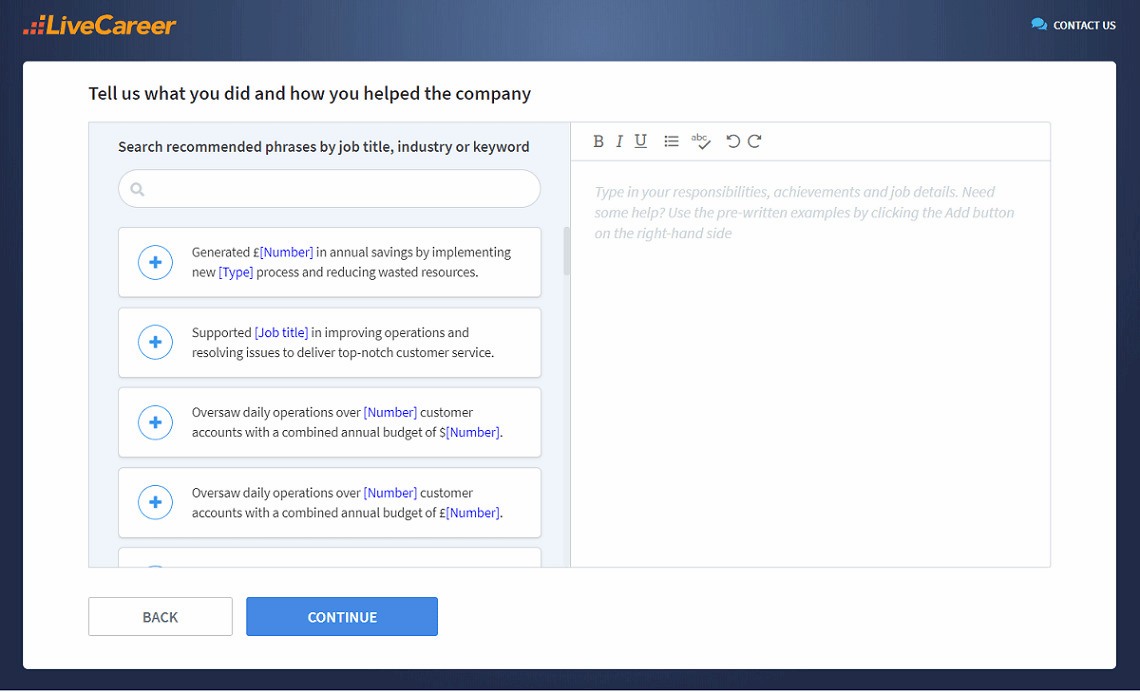
You don’t have to be a CV writing expert. In the LiveCareer CV builder you’ll find ready-made content for every industry and position, which you can then add with a single click.
Ready to showcase your work? Create your professional portfolio today and ensure your CV stands out by providing a compelling and professional representation of your skills.
How we review the content at LiveCareer
Our editorial team has reviewed this article for compliance with LiveCareer’s editorial guidelines. It’s to ensure that our expert advice and recommendations are consistent across all our career guides and align with current CV and cover letter writing standards and trends. We’re trusted by over 10 million job seekers, supporting them on their way to finding their dream job. Each article is preceded by research and scrutiny to ensure our content responds to current market trends and demand.
Sources
About the author
Maciej Staszek Tomaszewicz
Maciej is a certified career expert who brings over a decade of expertise in crafting tailored CVs and cover letters. He combines deep industry knowledge with a friendly, accessible writing style, aiming to empower job seekers with practical tips and insightful career advice.
Looking for a job-winning CV?
Crafting a job-winning CV is all about showcasing your unique skills and experiences. Start with a strong personal statement that highlights your career goals and achievements.
Try Our CV Builder Now