10+ Video Interview Tips to Help You Get Hired
Last updated on 14 January, 2026

Danuta DetynaWriter, Professional Association of Resume Writers and Career Coaches (PARWCC)

Our customers have been hired by*:
Video interviews are now a standard part of the hiring process across the UK. Whether you’re applying for a hybrid, remote, or traditional office-based role, it’s likely you’ll be interviewed online at some stage.
I’ll show you practical video interview tips to help you perform at your best. From preparing your content and setting up your space to managing the technology and communicating clearly, these tips for a successful video interview will help you shine – whether your interview is live or pre-recorded.
Create an effective CV in minutes. Choose a professional CV template and fill in every section of your CV in a flash using ready-made content and expert tips.
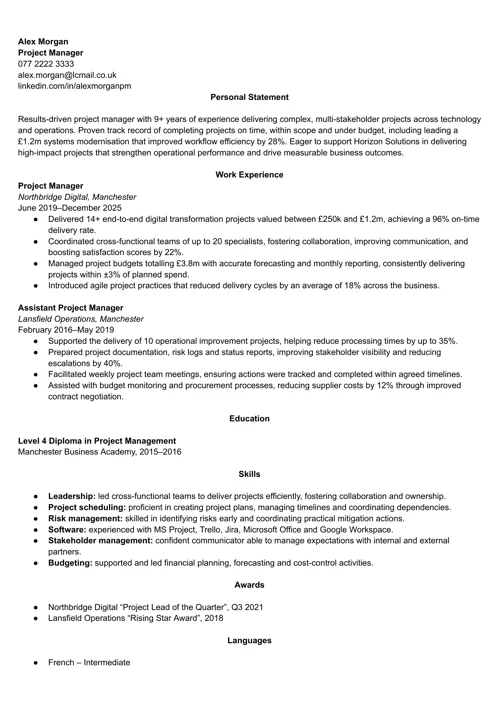
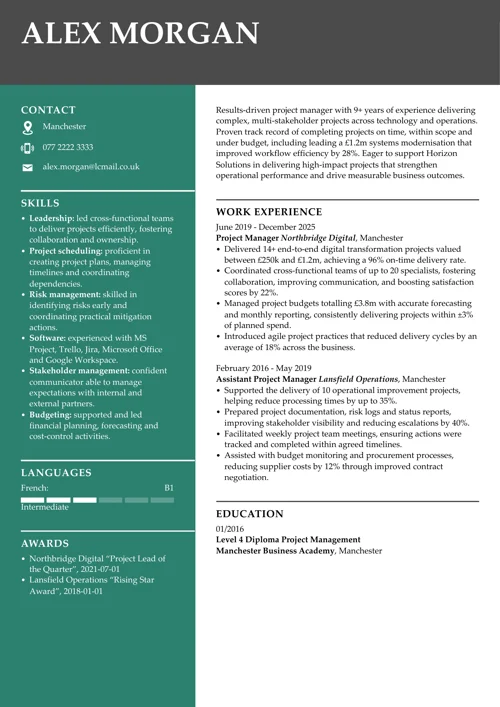
We created the sample on the right using our builder. See other good CV examples like this one.
Preparing for job interviews? Check out these articles:
- Top Situational Interview Questions and Answers
- Smart Questions for Your Informational Interview
- Key Signs of a Toxic Workplace to Watch For
- Highest Paying Jobs in the UK Right Now
Now, let me show you 12 tips for video interviews to increase your chances of landing your dream job.
1. Understand the type of video interview you’ll be doing
Before preparing your answers or planning your setup, determine the type of video interview you’ve been invited to. Each format requires a slightly different approach. Understanding what to expect creates a sense of calm and clarity before you even sit down at the desk.
Video interviews usually fall into two categories:
Live video interviews
Live video interviews happen in real time via platforms like Zoom, Microsoft Teams, or Google Meet. You’ll interact with an interviewer or panel, answer follow-up questions, and build rapport in a natural conversation. It closely resembles a standard face-to-face interview, just with a screen between you.
Pre-recorded video interviews
Pre-recorded or one-way interviews require you to record responses to displayed questions within a fixed time limit. There’s no opportunity to ask for clarification or build a conversation, so the focus is on delivering structured, confident answers. With good preparation, this format can work in your favour by allowing you to rehearse and refine your presentation.
2. Prepare your material: what you’re going to say
Even in a virtual setting, the strength of your answers is what matters most. Good preparation helps you speak confidently, avoid rambling, and highlight professional skills in a clear, structured way. When you know the contents of your CV inside out, you reduce nerves and adapt smoothly to whatever questions you’re asked.
Preparing thoroughly also shows that you’ve taken the role seriously, understand the employer’s needs, and can articulate exactly what you bring to the table. This is where strong preparation can make you stand out from other candidates.
Research the company thoroughly
Employers notice instantly when a candidate has taken the time to understand their organisation. Look beyond the homepage – explore the company’s mission, values, products, culture, recent news, and key challenges. Being able to reference what you’ve learned shows insight and genuine interest.
Analyse the job description
The job description is a map of what the employer is looking for. Break down the essential skills and responsibilities and match them to your experience. Use these as prompts for your interview preparation to ensure your answers stay focused and relevant.
Use the STAR method for examples
You’ve probably heard of writing your CV using the STAR method, so it won’t be a surprise to you that for competency-based questions, the STAR method – Situation, Task, Action, Result – keeps your answers structured and impactful. Prepare multiple examples demonstrating teamwork skills, leadership skills, problem-solving abilities, strong communication skills, and initiative. These ready-made stories help you respond smoothly, even under pressure.
Practise common interview questions
Certain questions appear in almost every interview. Practising your responses aloud helps you refine your message and avoid going blank. Focus on questions like:
- Tell me about yourself.
- Why do you want to work here?
- What are your strengths and weaknesses?
- Describe a challenging situation you handled well.
Aim for confident, concise, conversational answers – not memorised scripts.
3. Prepare your setting: what they’ll see
Your environment is part of the first impression you make. In a video interview, the background, lighting, and general set-up all contribute to your professional image. A clean, calm space shows that you’re organised and ready, and it helps the interviewer focus entirely on you.
A thoughtfully prepared setting also helps you feel more in control. When you know everything looks good on screen, it becomes easier to focus fully on delivering strong answers.
Choose a quiet and tidy location
Pick a quiet room where you can shut the door and minimise interruptions. A simple, clutter-free background works best – plain walls, a tidy bookshelf or minimal decor. Avoid anything that could distract the interviewer, as a study by Durham University found that video call backgrounds affect first impressions.
What’s the best interview background?
Based on the study’s findings, the best video interview backgrounds are:
- A plain wall or neutral space
Clean, uncluttered walls help keep the focus on you and create a professional impression without visual noise. - A tidy bookshelf or home office setting
Organised shelves or a work-style environment are generally perceived as more competent and credible than blank virtual backgrounds. - Soft, natural lighting with minimal contrast
Well-lit backgrounds without harsh shadows help interviewers read facial expressions more easily, improving engagement.
Backgrounds to avoid include:
- Messy or cluttered rooms, which can signal disorganisation
- Strongly personalised spaces (e.g. posters, busy décor)
- Virtual or blurred backgrounds, which the study found can feel less natural and reduce perceived trustworthiness
When in doubt, aim for a background that looks calm, realistic and professional—something that wouldn’t draw attention if you were sitting in an office meeting.
Set up good lighting
Lighting dramatically affects how you appear on screen; that’s why you should learn how to set up the best lighting for video job interviews. Sit facing a window to make the most of natural light. If that’s not possible, use a lamp placed behind the screen to light your face evenly. Avoid sitting with a bright window behind you, as this creates shadows.
Position your camera correctly
Your camera should be at eye level, framed to show your head, shoulders and upper chest. This angle feels natural and helps you maintain effective simulated eye contact. Use books or a laptop stand to raise your device if needed.
4. Test your technology properly
Technical issues are a major concern for many candidates, but most can be prevented with proper testing. Checking your equipment ahead of time minimises the risk of disruptions and makes you feel more confident. Employers don’t expect perfection, but they do expect you to prepare. When tech runs smoothly, you can focus on creating a strong impression.
Test the day before
At least 24 hours before the interview:
- Check your microphone, speakers and camera.
- Test the platform – Zoom, Teams, Meet, or whichever tool is required.
- Update the software so it won’t restart mid-interview.
- Test your internet connection for stability.
- Practise joining a mock call with a friend or family member.
Prepare on the day
On interview day:
- Restart your device to clear background programmes.
- Plug in your laptop or ensure it is fully charged.
- Close unnecessary tabs and turn off notifications.
- Join the meeting 10 minutes early.
If something does go wrong, acknowledge it calmly and fix it quickly – professionalism matters more than perfection.
5. Dress professionally, even at home
What you wear influences both how you’re perceived and how confident you feel. Dressing professionally sets the right tone and signals to the interviewer that you take the opportunity seriously. It also helps you slip into a more formal, interview-ready mindset.
Even though you’re at home, aim for the same level of presentation you would bring to an in-person meeting:
- Choose smart, professional clothing that aligns with the company’s culture.
- Solid colours often look best on camera.
- Avoid overly bright patterns or reflective jewellery.
- Dress fully – not just the top half.
A polished appearance builds trust and enhances your professional credibility.
6. Use positive and engaging body language
Body language is a powerful communication tool, even when you’re only visible from the waist up. In a video interview, you must be intentional with your non-verbal signals, as small movements are magnified. Limited visibility means facial expressions carry more weight.
Positive body language helps you appear confident, engaged, and enthusiastic.
Posture and presence
Sit upright with your feet on the floor and lean slightly forward to show interest. Avoid slouching or rocking in your chair. A stable, centred posture conveys confidence and focus.
Eye contact
Look directly at the camera when speaking to mimic eye contact. When listening, you can look at the interviewer on the screen – but keep the video window near the top, close to the camera, to limit eye movement.
Tip: If you constantly look at your own face instead of the interviewer, consider hiding your self-view in the video call app to avoid distraction.
Facial expression and gestures
Use natural nods and smiles to show engagement. Keep gestures to a minimum and keep them within the frame to avoid distracting movements.
7. Use notes wisely and sparingly
One benefit of video interviews is the ability to keep notes nearby. Used well, notes help you stay on track and remember your key achievements or figures. Used poorly, they can make your delivery seem scripted or disconnected.
Strike a balance by using notes as subtle prompts – not scripts:
- Use short bullet points, not long sentences.
- Include STAR prompts for key examples.
- Place notes near your camera to avoid obvious eye movement.
- Practise with your notes to keep your delivery natural.
- Remember that notes should support your performance – not dominate it.
If you have multiple screens, open your CV on the side monitor so you can quickly review it during the call. It can be helpful for reviewing dates or metrics.
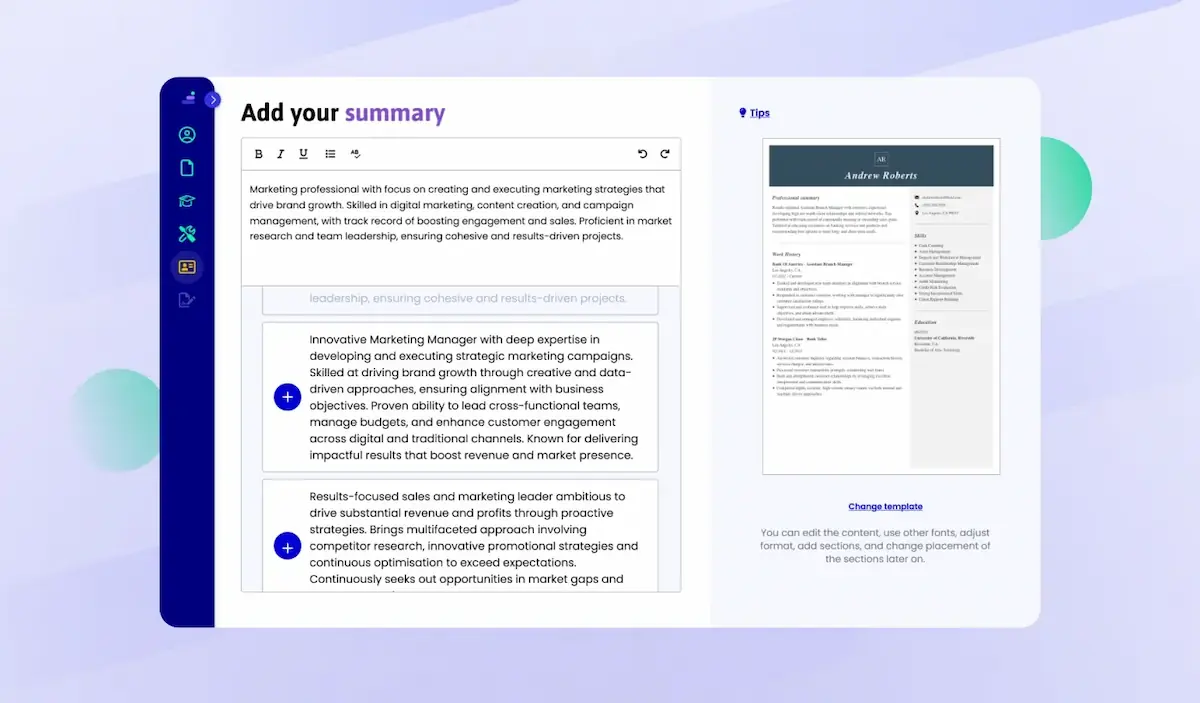
A strong CV summary will convince the recruiter you’re the perfect candidate. Save time and choose a ready-made personal statement written by career experts and adjust it to your needs in the LiveCareer CV builder.
8. Speak clearly and confidently
Your voice carries more weight in a video interview than in person, because body language is limited. Speaking clearly, calmly, and confidently shows that you’re prepared, capable, and enthusiastic. A thoughtful pace also helps avoid audio clashes caused by internet delays.
Good vocal delivery makes your answers more persuasive and easier to follow.
Here’s how to speak effectively during a video call:
- Slow your pace slightly and enunciate clearly.
- Keep your tone warm and positive.
- Vary your pitch to avoid sounding flat.
- Pause before responding to avoid talking over the interviewer.
Recording yourself in advance is one of the simplest ways to quickly improve your delivery.
9. Prepare for pre-recorded video interviews
Pre-recorded interviews can feel unfamiliar, but they’re increasingly common. One of the best tips for pre-recorded video interviews is focusing on strong structure, clear delivery, and confidence without conversational cues. The more you practise beforehand, the more natural your performance will feel.
Approaching the format with clarity and preparation helps you turn a potentially awkward situation into a strong opportunity.
Follow these pre-recorded video interview tips:
- Practise recording yourself answering typical questions.
- Use preparation time to outline your three key points.
- Imagine speaking to a real person behind the camera.
- Keep your energy high – interviewers can sense enthusiasm even through a screen.
Good structure and confident delivery make a powerful impression in this format.
10. Reduce the risk of interruptions
Interruptions can be stressful, but most are avoidable with planning. Even if you live in a busy household, taking proactive steps helps you maintain control and stay focused. Employers understand the realities of home life, but they also appreciate professionalism. Careful preparation keeps the interview running smoothly and shows you respect the interviewer’s time.
Here are some video call interview tips to prevent disruptions:
- Silence your phone and disable notifications.
- Close messaging apps on your computer.
- Let housemates or family members know your interview time.
- Place pets in another room if possible.
- If unavoidable noise is likely, mention it briefly at the start.
Handling interruptions calmly still leaves a positive impression.
11. Treat the interview as a conversation, not a test
Passing a video interview isn’t just about strong answers and following the best video job interview tips – it’s about connection and showcasing your people skills. Interviewers want to hire someone with essential employability skills: someone who communicates well, listens actively, and is easy to work with. Seeing the job interview as a two-way conversation helps you come across as personable and authentic.
When you relax into the conversation, your natural strengths shine through. Use the advice below to build rapport:
- Greet the interviewer warmly and use their name.
- Show genuine interest in their comments.
- Ask the recruiter thoughtful questions throughout your job interview, not just at the end.
- Treat the call as an opportunity to learn about the company.
Creating a conversational flow sets you apart from candidates who simply recite answers and increases the likelihood of a successful job interview.
12. Follow up professionally after the interview
Your post-interview actions matter. Reflecting on your performance helps you improve, and following up with a thank-you message reinforces your professionalism and interest. These small steps help you stand out and leave a lasting positive impression. Thoughtful post-interview follow-up can be the final touch that moves you ahead of other candidates.
Here’s what to do after your video interview:
- Write down the questions asked and note areas for improvement.
- Capture achievements or details you wish you’d mentioned.
- Send a short thank-you email within 24 hours.
- Reaffirm your enthusiasm for the role and appreciation for their time.
Professional courtesy speaks volumes about your character.
Final thoughts on mastering the modern video interview
Video interviews are now a permanent fixture in the UK job market, and knowing the best tips for a video interview gives you a genuine advantage. By combining thorough preparation, a polished set-up, confident communication, and strong follow-up, you can deliver a compelling performance in any video format.
These video interview tips equip you to navigate online interviews with confidence and professionalism. Whether your interview is live or pre-recorded, the goal is the same: to demonstrate clarity, capability, and genuine enthusiasm for the role.
With the right preparation and mindset, you can make the technology work for you – and give the interviewer every reason to see you as the ideal candidate.
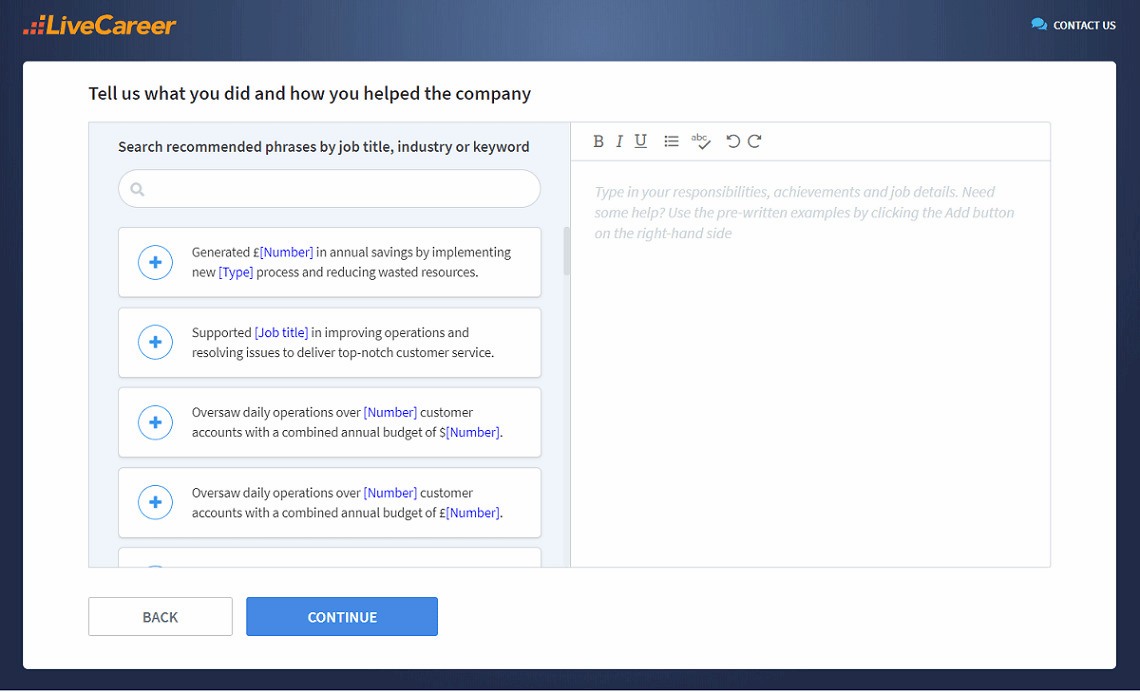
You don’t have to be a CV writing expert. In the LiveCareer CV builder you’ll find ready-made content for every industry and position, which you can then add with a single click.
Thank you for reading my article about the best tips on video interviews. If you’d like to read more about job interviews and more, head over to our blog for more inspiring articles:
- How to Get a Job: Essential Steps for Success
- How to Upload Your CV to LinkedIn Easily
- How to Find a Job in London Fast
- How to Write a CV: UK Guide With Examples
How we review the content at LiveCareer
Our editorial team has reviewed this article for compliance with LiveCareer’s editorial guidelines. It’s to ensure that our expert advice and recommendations are consistent across all our career guides and align with current CV and cover letter writing standards and trends. We’re trusted by over 10 million job seekers, supporting them on their way to finding their dream job. Each article is preceded by research and scrutiny to ensure our content responds to current market trends and demand.
Sources
About the author
Danuta Detyna
Danuta Detyna is a Certified Professional Résumé Writer and career expert with over nine years of writing experience. Known for her empathetic, detail-oriented approach, she creates practical and empowering career resources that help job seekers move forward with confidence.
Looking for a job-winning CV?
Crafting a job-winning CV is all about showcasing your unique skills and experiences. Start with a strong personal statement that highlights your career goals and achievements.
Try Our CV Builder Now