UK Job Market 2026: What 5 Million CVs Reveal
Last updated on 1 September, 2026

Patrycja MazurczakWriter, Professional Association of Resume Writers and Career Coaches (PARWCC)

Our customers have been hired by*:
Job hunting is tough. Not only do you need to create a stunning CV that grabs the attention of potential recruiters, but you also need one compelling enough to outshine the competition. But who exactly is your competition in 2026? Are your skills and qualifications enough to succeed in today’s job market?
Last year, we analysed over 6.5 million user CVs from LiveCareer UK’s database to create the profile of “John Average”, the typical UK job seeker in 2024-2025. This year, we’ve updated our research with data collected from an additional 5 million CVs created in the last 12 months to see exactly how candidates are adjusting their strategies.
Key Takeaways
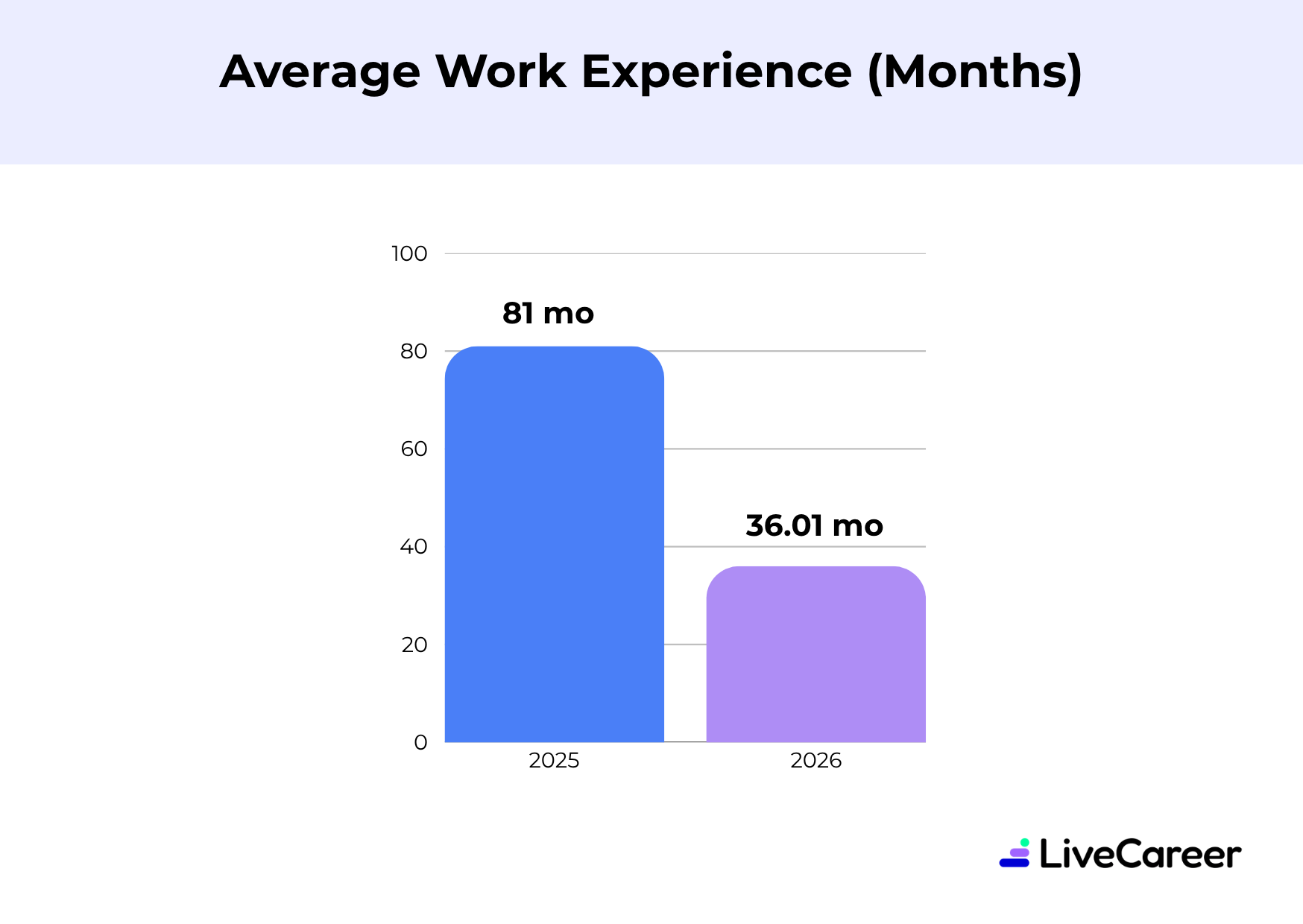
- Work Experience: The average candidate’s work experience has dropped by 55.5% compared to last year, falling from 6 years and 9 months to 3 years (36.01 months).
- Cover Letters: Last year, nearly a third (31.41%) of UK users started a cover letter. In 2026, that number dropped to 1.12%.
- Most Popular Roles: “Intern” is the single most common recent job title across all CVs (1.83%).
- CV Length: While the average CV takes 27 minutes and 3 seconds to make, the proportion of long CVs (700+ words) jumped from 15.73% last year to 20.60% today.
- Remote Work: Despite lingering post-pandemic narratives, remote work skills appear on only 0.81% of CVs, showing that on-site and hybrid roles could be dominating the UK market.
The 15 Most Popular UK Roles in 2026
Here are the top 15 most popular jobs listed in the UK in the last 12 months, organised by total applicant volume, with the average months of experience candidates hold for each role:
- Intern – Average experience in months: 9.73
- Executive – Average experience in months: 63.11
- Manager – Average experience in months: 124.44
- Assistant manager – Average experience in months: 96.47
- Customer service representative – Average experience in months: 39.89
- Teacher – Average experience in months: 37.98
- Cashier – Average experience in months: 29.60
- Sales assistant – Average experience in months: 26.29
- Sales executive – Average experience in months: 36.14
- Driver – Average experience in months: 54.15
- Student – Average experience in months: 15.93
- Supervisor – Average experience in months: 58.85
- Accountant – Average experience in months: 42.17
- Team leader – Average experience in months: 72.19
- Cleaner – Average experience in months: 25.94
What changed in 2026: Three new roles – Executive, Driver, and Cleaner – entered the top 15, replacing Receptionist, Waiter, and Software Engineer. Additionally, every single returning job title saw a noticeable decrease in its average months of experience.
Professional Experience & Job-Hopping
In 2026, CVs demonstrate shorter tenures and less overall experience:
- The average job hunter claims roughly 3 years (36.01 months) of total work experience.
- Candidates list an average of 2.65 previous roles on their CV.
- “Intern” ranks as the most popular recent job title (1.83%), with those users reporting an average of just 9.73 months of experience.
- Job-hopping is highly prevalent, with 27.71% of candidates listing 4 or more past jobs.
What changed in 2026: Average work experience plummeted by a staggering 55.5% (down from 81 months to 36.01 months). Consequently, job-hopping surged, with candidates listing 4 or more past jobs increasing from 10.98% last year to 27.71% today.
Education & Degrees
With less work experience on their side, candidates lean on their academic backgrounds:
- High School/Secondary education is the most frequently listed highest degree (23.39%).
- For higher education, a Bachelor of Science (11.94%) is the most popular.
- Higher-ed certifications (10.71%) and a General Bachelor’s Degree (7.97%) closely follow as the next most common qualifications.
What changed in 2026: The proportion of candidates relying on Secondary education as their primary academic achievement surged by roughly 9 percentage points (climbing from 14.38% to 23.39%). Meanwhile, Bachelor of Science degrees also saw a significant bump, rising from 7.7% to 11.94% year-over-year.
CV Document Length & Creation Time
Despite moving faster to apply, candidates are putting more words onto the page:
- The modern CV sits comfortably at exactly 2 pages.
- The average UK user spends 27 minutes and 3 seconds building their document.
- While 26.69% of users prefer to keep things brief (100–300 words), a growing segment (20.60%) is writing much longer documents containing 700+ words.
What changed this year: Candidates are spending over a minute longer building their CVs compared to last year, and they are using that time to write more. Extremely short CVs (under 100 words) plummeted from 18.55% down to just 5.71%, while lengthy 700+ word CVs increased by nearly 5%.
Cover Letters
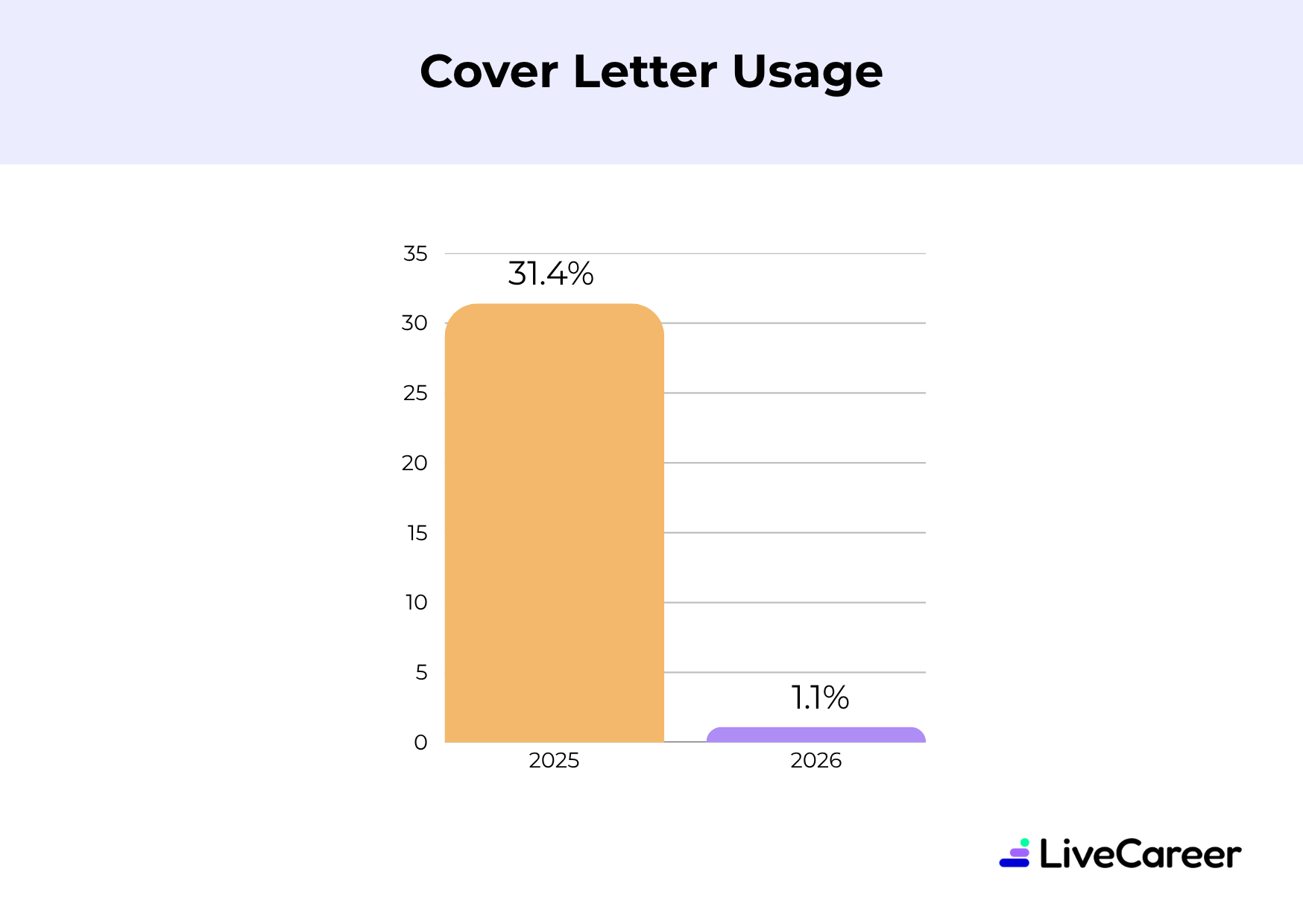
The cover letter has become a rare sight in 2026. A mere 1.12% of UK users created or downloaded one to accompany their application.
What changed in 2026: The cover letter suffered a massive 96% collapse in adoption. Last year, 31.41% of UK users started a cover letter (making them the most likely demographic on the platform to do so), but that practice has practically vanished in the current market as job hunters opt for faster application strategies.
Skills, Verbs, & Bonus Sections
Candidates are using specific language and extra sections to pad out their applications:
- The average CV features about 8 skills, heavily favouring soft and interpersonal strengths like Customer Service, Team Collaboration, and Communication.
- When describing past jobs, candidates lean on strong action verbs, heavily utilising “Led” (23.46%) and “Managed” (16.29%), yet only 22.87% quantify their achievements with actual numbers.
- To stand out, 25.31% of applicants include a “Languages” bonus section, and 14.6% include “Certifications.”
What changed in 2026: While the emphasis on soft skills remained steady, remote work skills stayed extremely rare, edging up only slightly from 0.29% to 0.81%. However, the inclusion of extra certifications jumped significantly; last year, over 80% of users had zero certificates on their resumes, but today, job seekers are actively seeking extra credentials to accompany their shorter work histories.
Methodology
The study is based on the analysis of 5 million real professional CVs created by users of LiveCareer UK – a representative group of women and men of different ages and at different stages of their professional careers. The analysed documents for this year’s report were created between August 5, 2025, and August 5, 2026.
To identify year-over-year market shifts and changes in applicant behaviour, this newly collected data was directly compared against our previous baseline study, which analysed over 6.5 million UK CVs generated between October 30, 2023, and November 1, 2024.
About the author
Patrycja Mazurczak
Patrycja is a career expert who specialises in helping you create compelling CVs and cover letters. With over 10 years of experience in content creation processes, she brings her expertise to the forefront of the industry.
Looking for a job-winning CV?
Crafting a job-winning CV is all about showcasing your unique skills and experiences. Start with a strong personal statement that highlights your career goals and achievements.
Try Our CV Builder Now