9 in 10 Women Would Stay Longer With Employers That Support Midlife Health
Last updated on 16 February, 2026

Jasmine EscaleraCareer Expert

Our customers have been hired by*:
Workplace expectations continue to evolve as employees seek environments that recognize the realities of midlife health. LiveCareer UK’s Midlife Divide Report shows that menopause support may be one of the most effective retention strategies for today’s workforce. The findings highlight the growing need for employers to build cultures that understand and respond to this critical life stage.
Key Takeaways:
- 91% would be more likely to stay with an employer that actively supports midlife health needs.
- Flexible schedules (58%), mental health days (56%), and more women in leadership roles (54%) were ranked as the most impactful forms of support.
- 68% say gender and age influence how seriously their health concerns are taken at work.
- Nearly one in four (23%) feel menopause is still misunderstood and insufficiently addressed in the workplace.
Menopause Support as a Retention and Inclusion Strategy
Nine in ten women (91%) say they would be more likely to stay with an employer that actively supports midlife health needs. Far from a niche issue, menopause awareness and accommodation are fast becoming key components of inclusive, competitive workplaces.
Flexibility Tops the List of What Midlife Women Want Most from Employers
When asked what would make them feel more supported at work, women overwhelmingly pointed to flexibility, paid leave, and representation, underscoring the need for both policy and cultural change in the workplace.
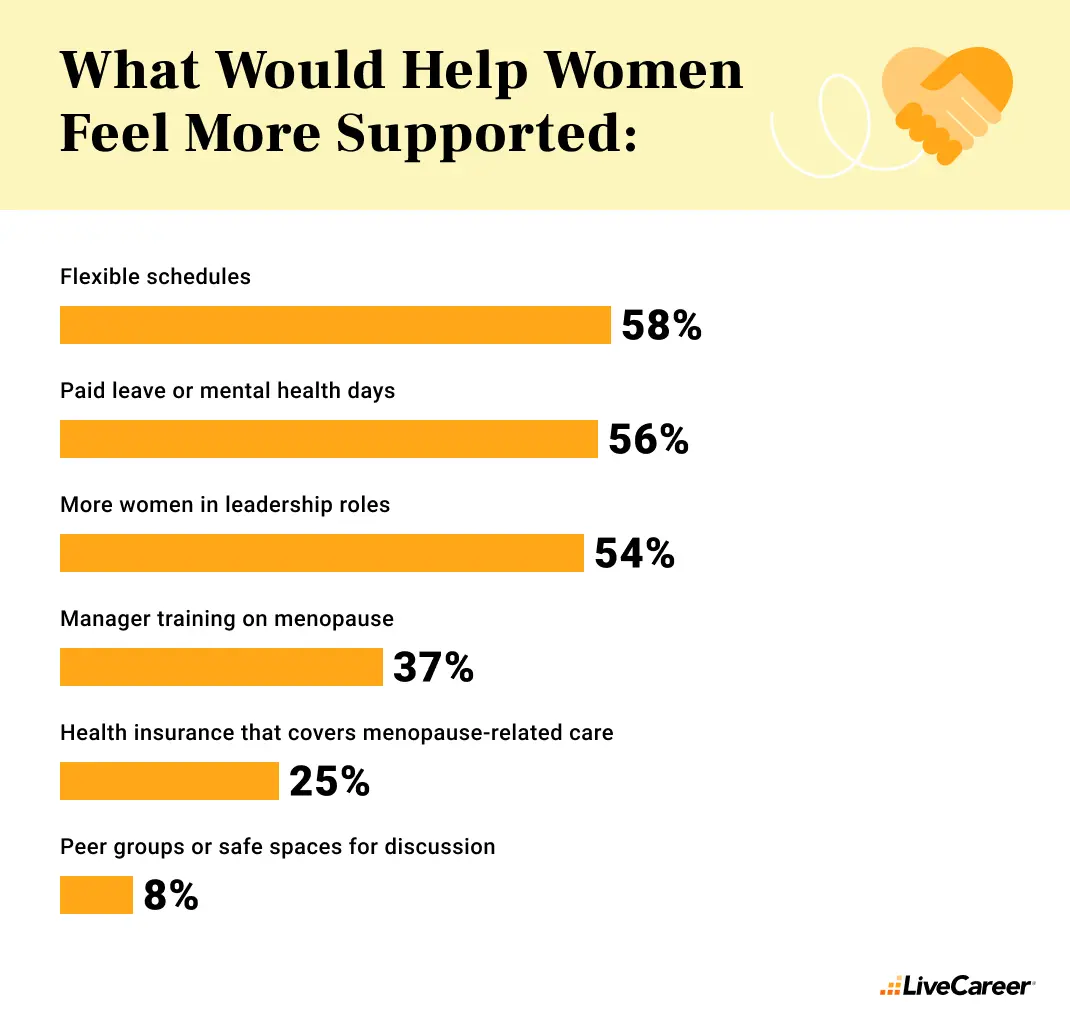
What Would Help Women Feel More Supported:
- 58% — Flexible schedules
- 56% — Paid leave or mental health days
- 54% — More women in leadership roles
- 37% — Manager training on menopause
- 25% — Health insurance that covers menopause-related care
- 8% — Peer groups or safe spaces for discussion
What this means: The combined findings make it clear that midlife support is both a retention strategy and an inclusion imperative. When employers align policies and culture with what midlife women say they need, the result is a more supportive environment that encourages people to stay and grow.
How Women Manage Menopause
In the absence of targeted workplace benefits, many women rely on personal strategies to manage symptoms and maintain productivity:
- 58% seek therapy or mental health support.
- 58% turn to exercise or nutrition changes.
- 52% use hormone replacement therapy (HRT) or other medication.
- 40% rely on supplements or alternative medicine.
- 29% adjust their work hours to cope.
- 6% are not taking specific action; fewer than 2% say symptoms haven’t affected their work.
What This Means: These patterns highlight how midlife women often shoulder the burden of managing symptoms on their own when workplace support is lacking. Stronger organizational commitment can create a more sustainable and supportive environment.
Gender and Age Bias Shape How Midlife Health Is Perceived at Work
Even as conversations about menopause become more visible, a persistent perception gap remains.
- 68% say both gender and age affect how their health concerns are taken.
- 22% cite gender alone.
- 8% say age is the primary factor.
- Only 2% believe neither gender nor age plays a role.
These perceptions reinforce how workplace culture, not just policy, determines whether women feel seen and supported during a critical career stage.
What This Means: The persistence of bias shows that policy changes alone cannot close the support gap. Progress depends on cultivating workplace cultures where midlife women’s experiences are understood, validated, and taken seriously.
Menopause shouldn’t be a career limiter. Normalizing the conversation and providing meaningful support will help organizations retain talent, protect their leadership pipeline, and foster a stronger, more inclusive workplace culture.
Methodology
The findings were obtained by surveying 898 working women in the U.S. who are experiencing or have gone through menopause. The poll obtained information about their direct experience working through menopause. The survey was conducted on September 18, 2025. Respondents answered different types of questions, including yes/no, open-ended, scale-based questions where participants indicated their level of agreement with statements, and multiple-choice where they could select from a list of provided options.
About LiveCareer
LiveCareer’s online CV builder is designed to empower its users to get better jobs and improve their job search. A one-stop shop among AI CV builder tools, LiveCareer features cutting-edge CV templates, a powerful cover letter builder, and extensive free career resources to support job candidates in reaching their professional goals. Used by over 28 million job seekers around the world, LiveCareer has been publishing expert advice from Certified Professional Resume Writers since 2005. LiveCareer’s career tips have been featured in renowned media outlets, including Bloomberg, Forbes, and Newsweek. Stay connected with LiveCareer’s latest updates to improve your job search on Facebook, Instagram, LinkedIn, and X.
About the author
Jasmine Escalera
Jasmine is a career expert with a background in nonprofit management and significant experience as a hiring manager and leader. She focuses on helping job seekers improve their professional CV’s to highlight their unique skills and experience. Jasmine holds a B.S. in biochemistry and PhD in neuropharmacology and offers six years of specialized experience helping candidates navigate the complexities of today’s online job market, with a strong focus on CV optimization and effective self-presentation. She has had her work featured on LiveCareer’s CV builder and in these online publications: Fast Company, CNBC, Fortune, and more.
Looking for a job-winning CV?
Crafting a job-winning CV is all about showcasing your unique skills and experiences. Start with a strong personal statement that highlights your career goals and achievements.
Try Our CV Builder Now