Self-Employed But Working for an Employer: Rules & Tips
Last updated on 14 January, 2026

Danuta DetynaWriter, Professional Association of Resume Writers and Career Coaches (PARWCC)

Our customers have been hired by*:
Can you be both self-employed and working for an employer? The short answer: yes. Many people hold down a regular job while freelancing on the side, or run their own business while still working closely with a single client. I’ll explain how that arrangement works, the everyday situations where it comes up, and some practical things to keep in mind. Let’s begin!
Create an effective CV in minutes. Choose a professional CV template and fill in every section of your CV in a flash using ready-made content and expert tips.
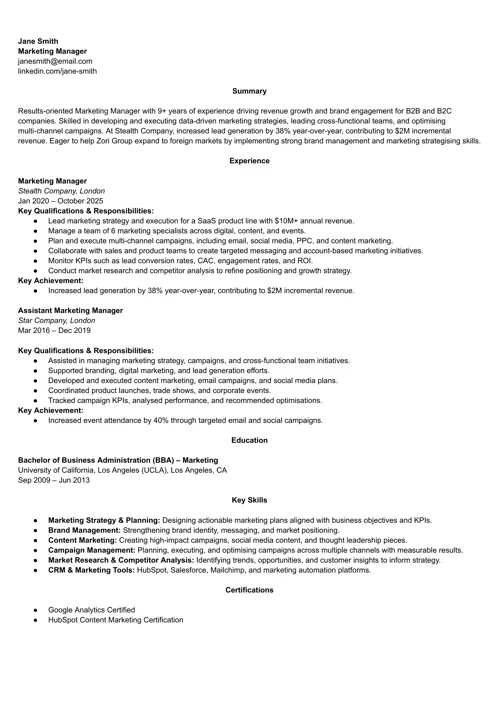
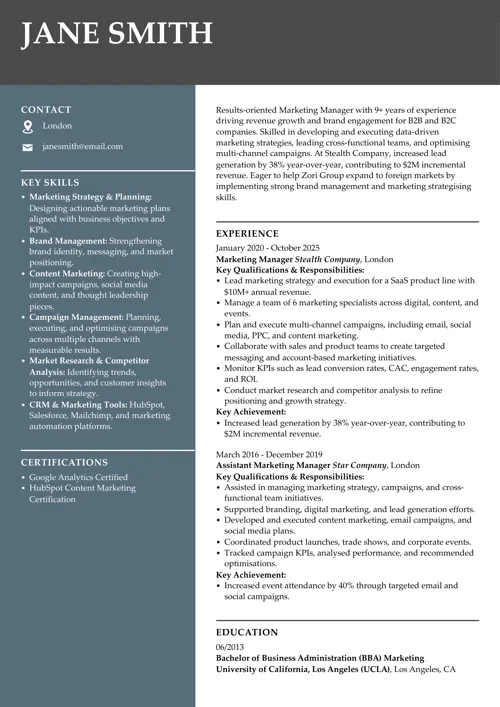
We created the sample on the right using our builder. See other good CV examples like this one.
Would you like to read about related topics? Check out the articles below:
- Writing a Self-Employed CV: Example & Tips
- Switching Careers? Pivots That Stand Strong in the AI Era
- Work-Related Stress: Stats for 2025
- UK Job Market Trends: Where Hiring Is Headed in Your Industry
- Which Jobs Are At Risk from AI? What You Need to Know
- Job Searching When the Market’s Slowing: Tactics That Work
- Tapping Into the Hidden Job Market: How to Get In
- Economic Outlook 2025: Insights from the Sentiment Report
- Careers That Can Survive Automation: AI-Proof Paths
- CV Samples for Every Profession: Browse & Learn
What “self-employed” and “employed” actually mean
Before deciding whether to combine statuses, it is helpful to be clear about what each one actually means in practice. These definitions determine your legal rights, how you get paid and who handles tax and National Insurance.
If you’re employed (PAYE), you usually:
- You are paid through your employer, who deducts Income Tax and National Insurance at source.
- Receive employment protections and statutory entitlements such as holiday pay and sick pay.
- Work under an employment contract with agreed hours or responsibilities.
If you’re self-employed (sole trader/contractor/freelancer), you typically:
- Run your own business and invoice clients directly.
- Manage your own accounts, tax reporting and payments.
- Have more control over how and when you work, but no automatic entitlement to benefits from clients.
How people end up self-employed but working for an employer
There are a few everyday situations that produce this setup, and it’s helpful to recognise which one applies to you. Each scenario presents its own set of practical and legal considerations.
Employee with a side hustle
Many people hold a salaried job while running a small business or freelancing in their free time, such as evenings and weekends (for example, tutoring, design, or dog walking). That’s usually straightforward, but you should check your employment contract for any restrictions on outside work and side hustles.
Contractor working mainly for one company
Sometimes contractors provide the bulk of their time to a single organisation. That can create a grey area around employment status, but it’s still possible to remain genuinely self-employed if the relationship is structured as a commercial one.
False self-employment: legal and practical risks
Misclassification can cause serious problems for both you and the engager. Signs of false self-employment include:
- Working exclusively for a single company with little control over how the work is done.
- The client sets fixed hours, supplies equipment and controls the way tasks are performed.
- No right to send a substitute or delegate the work.
If HMRC reclassifies the relationship, it can lead to back taxes, NICs and penalties, so get your status right from the start.
What to check in your employment and contractor documents
Contracts often decide outcomes long before disputes arise, so read them closely. This short chapter explains the practical clauses to look out for and why they matter.
Check these elements in any contract:
- Moonlighting or exclusivity clauses: some employers limit outside work.
- Control and hours: if a client sets your hours and supervises your day-to-day tasks, that looks more like employment.
- Substitution clauses: a genuine contractor can often send a substitute; inability to do so is a red flag for employment status.
- Payment terms and how you’re invoiced: they should reflect a commercial relationship rather than salary payments.
The admin burden of self-employment
If you’re mixing employed and self-employed income, there’s additional administrative work involved. You’ll need to:
- Tell HMRC you’re self-employed / register for Self Assessment (you must notify HMRC if you need to send a tax return).
- Submit Self Assessment tax returns and meet filing/payment deadlines (online filing and tax payment deadlines apply).
- Keep business records and supporting paperwork (income, invoices, expense receipts) and retain them for the legally required period.
- Register for VAT if your taxable turnover exceeds the statutory threshold (and comply with VAT reporting rules).
- Choose and maintain the correct business structure (e.g., sole trader or limited company) and comply with the specific legal obligations that follow (company accounts, Corporation Tax and Companies House filings if you run a limited company).
- Register as an employer and operate PAYE if you take on employees (including directors paid via payroll).
Pros and cons of being both employed and self-employed
Recent ONS figures show around 1.35 million people hold a second job – a record level. That trend helps explain why many workers combine PAYE work with self-employed activity: for extra income, flexibility, or to test a business idea.
In 2024, there were over 4 million self-employed people in the UK. To determine if this is a path for you, it’s beneficial to weigh the pros and cons. Weighing up advantages and drawbacks helps you decide whether juggling both makes sense.
Here are the main advantages of being both self-employed and working for an employer:
- Extra income and financial diversification.
- A low-risk way to test a business idea while keeping the security of a salary.
- Opportunity to develop new skills that can benefit both roles.
Although many people like being both self-employed and employed, such a combo has its own disadvantages:
- Higher administrative burden (bookkeeping, invoices, Self Assessment).
- Risk of burnout from balancing multiple commitments.
- Potential contractual conflicts or IR35 exposure if you’re effectively working solely for one client.
Mentioning self-employment on your CV
If you’re both employed and self-employed, it’s usually best to mention your self-employment on your CV, especially if the experience is relevant to your target role. Even if you have a regular job, your business work can demonstrate valuable skills like initiative, project management, and client communication.
Here’s how to present self-employment on a CV:
- Include your self-employed role in the experience section, just like any other job. List your business name (or your own name if you trade under it), your title (e.g., Freelance Copywriter or Owner, Bright Digital Studio), and the dates you’ve been active.
- Describe your responsibilities and key achievements. Focus on skills and results that transfer to the position you’re applying for – such as managing clients, delivering projects, or growing revenue.
- Avoid any appearance of conflict with your current employment. If you’re applying for a new job, you don’t have to disclose your side business unless it directly overlaps with the employer’s interests or affects your availability.
- Show balance by highlighting how your self-employment complements your primary role, perhaps by broadening your expertise or developing leadership skills.
In short: Yes, mention self-employment on your CV, but keep it concise, relevant, and framed as an asset. It’s an excellent opportunity to demonstrate independence and versatility without raising red flags about your commitment.
Final thoughts, and what to do next
Being self-employed but working for an employer is common and often a smart move, but the detail matters. Check your contracts, stay on top of tax and NI, log everything and get specialist help if IR35 or complex contracting is involved.
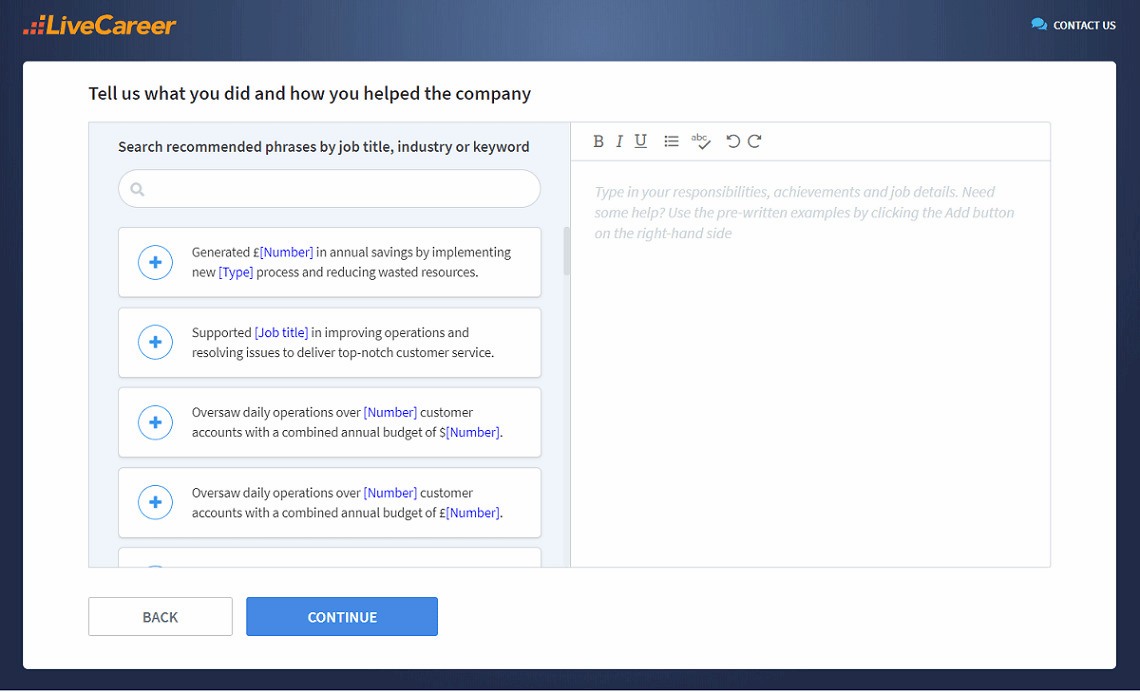
You don’t have to be a CV writing expert. In the LiveCareer CV builder you’ll find ready-made content for every industry and position, which you can then add with a single click.
Thank you for reading my article on being self-employed while working for an employer. If you’re looking for more career advice, I’d like to invite you to take a look at other articles on our blog. I’m sure they’ll provide you with lots of valuable tips!
How we review the content at LiveCareer
Our editorial team has reviewed this article for compliance with LiveCareer’s editorial guidelines. It’s to ensure that our expert advice and recommendations are consistent across all our career guides and align with current CV and cover letter writing standards and trends. We’re trusted by over 10 million job seekers, supporting them on their way to finding their dream job. Each article is preceded by research and scrutiny to ensure our content responds to current market trends and demand.
Sources
About the author
Danuta Detyna
Danuta Detyna is a Certified Professional Résumé Writer and career expert with over nine years of writing experience. Known for her empathetic, detail-oriented approach, she creates practical and empowering career resources that help job seekers move forward with confidence.
Looking for a job-winning CV?
Crafting a job-winning CV is all about showcasing your unique skills and experiences. Start with a strong personal statement that highlights your career goals and achievements.
Try Our CV Builder Now