AI, Human or CV Builder: Which One Actually Gets You Hired?
Last updated on 27 May, 2026

Patrycja MazurczakWriter, Professional Association of Resume Writers and Career Coaches (PARWCC)
Our customers have been hired by*:
Writing a CV has never been easier. It has also never been more confusing.
Job seekers today have a growing number of options: write it themselves, generate one with AI, or use a dedicated CV builder. Each promises quality, speed, and better results. But when it comes to actually passing applicant tracking systems (ATS) and securing interviews, which approach performs best?
To explore this, I ran a controlled comparison using a single candidate profile across three different CV creation methods: a self-written CV, an AI-generated CV using a basic prompt, and a CV created with the LiveCareer builder.
Create an effective CV in minutes. Choose a professional CV template and fill in every section of your CV in a flash using ready-made content and expert tips.
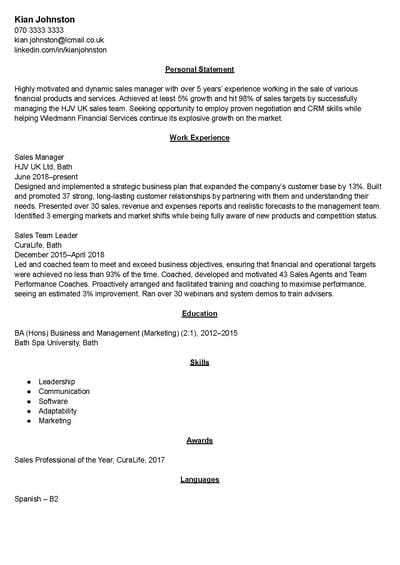
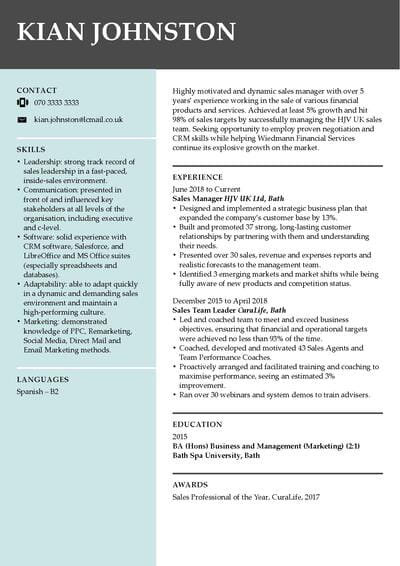
We created the sample on the right using our builder. See other good CV examples like this one.
How automation affects recruitment
Research consistently shows that many CVs are filtered out before they are ever read. Early-stage hiring is increasingly shaped by systems designed to filter, rank, and interpret information at scale.
With nearly 99% of hiring managers now utilising automatisation tools to manage the influx of data, understanding how different approaches affect CV performance is increasingly important. Small differences in how information is presented can have an outsized impact.
How the test worked
I created a fictional candidate and used the same base information across all three versions. Rather than testing ideal scenarios, the goal was to reflect how people typically create their documents in real life—with limited time, basic inputs, and minimal optimisation.
Each CV was produced under realistic conditions:
- Self-written CV: Created to reflect a typical DIY approach, including common formatting inconsistencies and vague phrasing we see daily in real applications.
- AI-generated CV: Produced using a simple prompt and raw experience data, without additional instructions for optimisation or keyword targeting.
- Builder-assisted CV: Created using LiveCareer CV builder, incorporating suggested improvements, structure guidance, and formatting adjustments while keeping the original experience consistent.
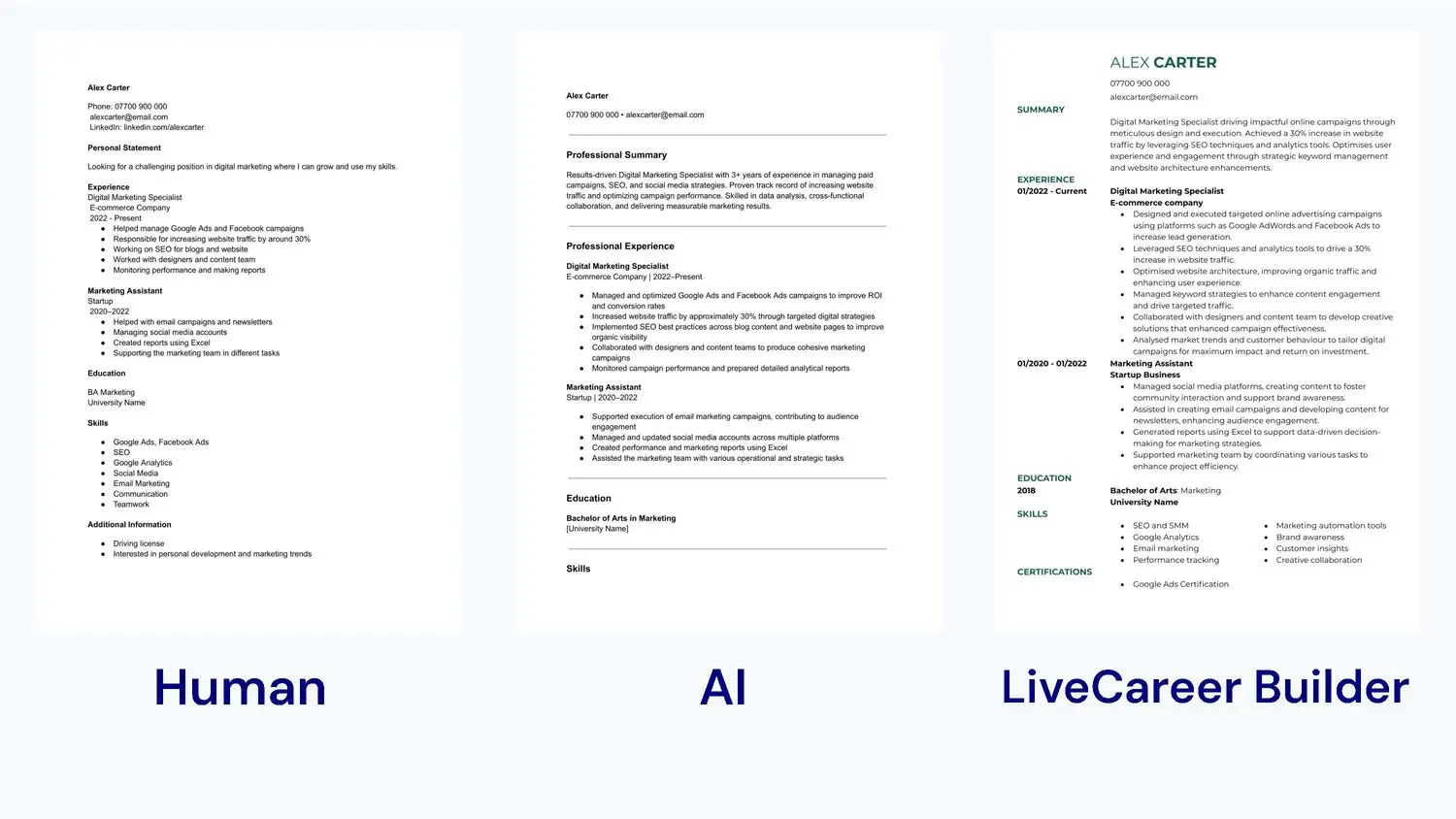
No additional experience or achievements were added in any version. Only the presentation and structuring of the same information varied.
Evaluating the three versions of a single CV
Each CV was assessed against a structured set of criteria based on common ATS requirements and recruiter expectations.
The goal wasn’t to determine a universally “perfect” CV, but to understand which method is most likely to perform well in the early stages of the hiring process—where both automated systems and quick recruiter scans play a decisive role.
Self-written CV: Familiar, but inconsistent
For many job seekers, writing a CV still means opening a blank document and building it line by line. It’s the most common approach, but also the most variable in quality.
In our test, the self-written CV reflected a typical do-it-yourself outcome. The core information was there, but the execution lacked consistency and impact.
The CV included key achievements, however, they offered limited insight into actual contributions. Formatting was generally readable but uneven. Small inconsistencies in date formats and structure contributed to an overall impression of limited attention to detail.
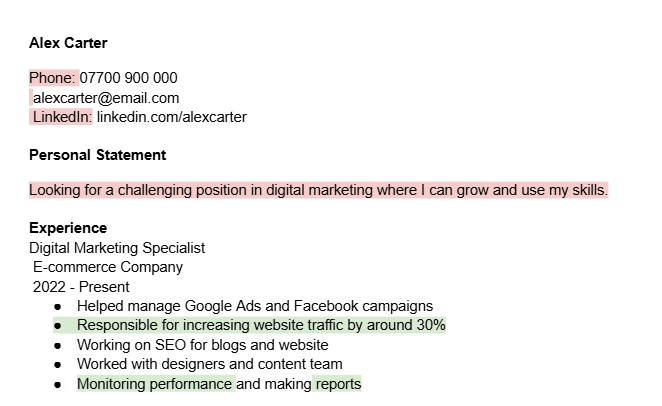
The personal statement was broad and failed to position the candidate for a particular role. This CV included generic skills and low-impact details such as a driving license and general interests that added length but did not strengthen the application.
Individually, none of these issues would necessarily disqualify a candidate. Taken together, however, they illustrate a broader pattern: a CV that is technically complete, but not strategically optimised.
AI-generated CV: Structured, but generic
AI tools are a popular shortcut for CV writing. With minimal input, they can produce a well-formatted document in seconds.
Using a simple prompt and the same raw experience data, the AI-generated CV showed clear improvements over the self-written version—particularly in structure and readability.
Experience descriptions were written with strong action verbs, creating a professional tone. The document followed a clear hierarchy, with well-defined sections and consistent formatting throughout. Compared to the DIY version, it was immediately easier to scan.
However, this improvement came with limitations.
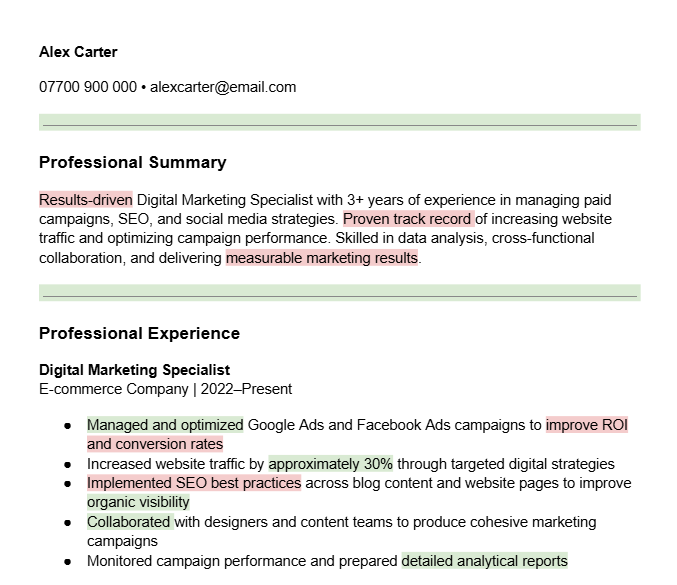
The summary section relied on widely used phrases such as “results-driven” and “proven track record,” which, while professional, offer little differentiation. The CV covered all key responsibilities, but tended to generalise rather than specialise, blending areas into a broad profile.
Keyword usage was present but not deeply optimised. While core terms appeared, more specific or role-targeted language—often critical for ATS performance—was limited.
In effect, the AI-generated CV functioned as a clean, competent baseline: a noticeable step up from a typical self-written document, but still lacking the strategic focus needed to stand out in competitive hiring processes.
Builder CV: Guided and optimised
The builder-assisted CV introduced a different approach for guiding how content is structured and presented.
Using the same base information, the builder provided suggestions throughout the process, including rephrasing bullet points, improving clarity, and reorganising content to highlight the most relevant contributions first.
This had a visible impact on the final result.
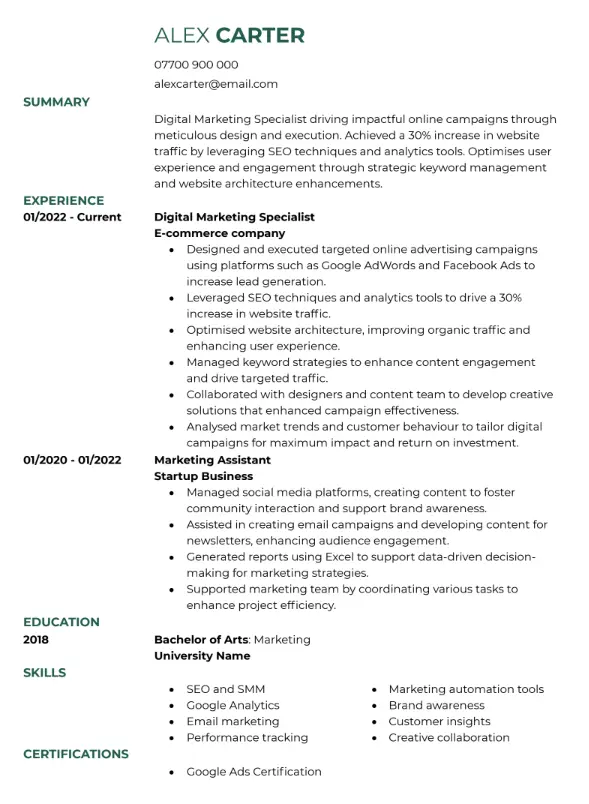
Bullet points were stronger in wording and also ordered strategically, with key achievements and high-impact responsibilities appearing first. The summary section moved beyond generic phrasing, incorporating specific strengths that created a clearer professional identity.
The builder also influenced structural decisions. Suggested sections were selectively included where relevant. Skills were subtly reordered to prioritise the most important competencies, improving both readability and keyword alignment.
Importantly, the process was not fully automated. Suggestions could be accepted or ignored, allowing the user to refine the document without losing control over its content.
The result was a CV that felt both polished and purposeful. Not just well-written, but deliberately structured to perform in screening systems and recruiter reviews.
Results: How each CV scored for ATS
After evaluating all three CVs using a structured scoring framework based on common ATS parsing standards and recruiter screening criteria, clear differences emerged in how effectively each version performed.
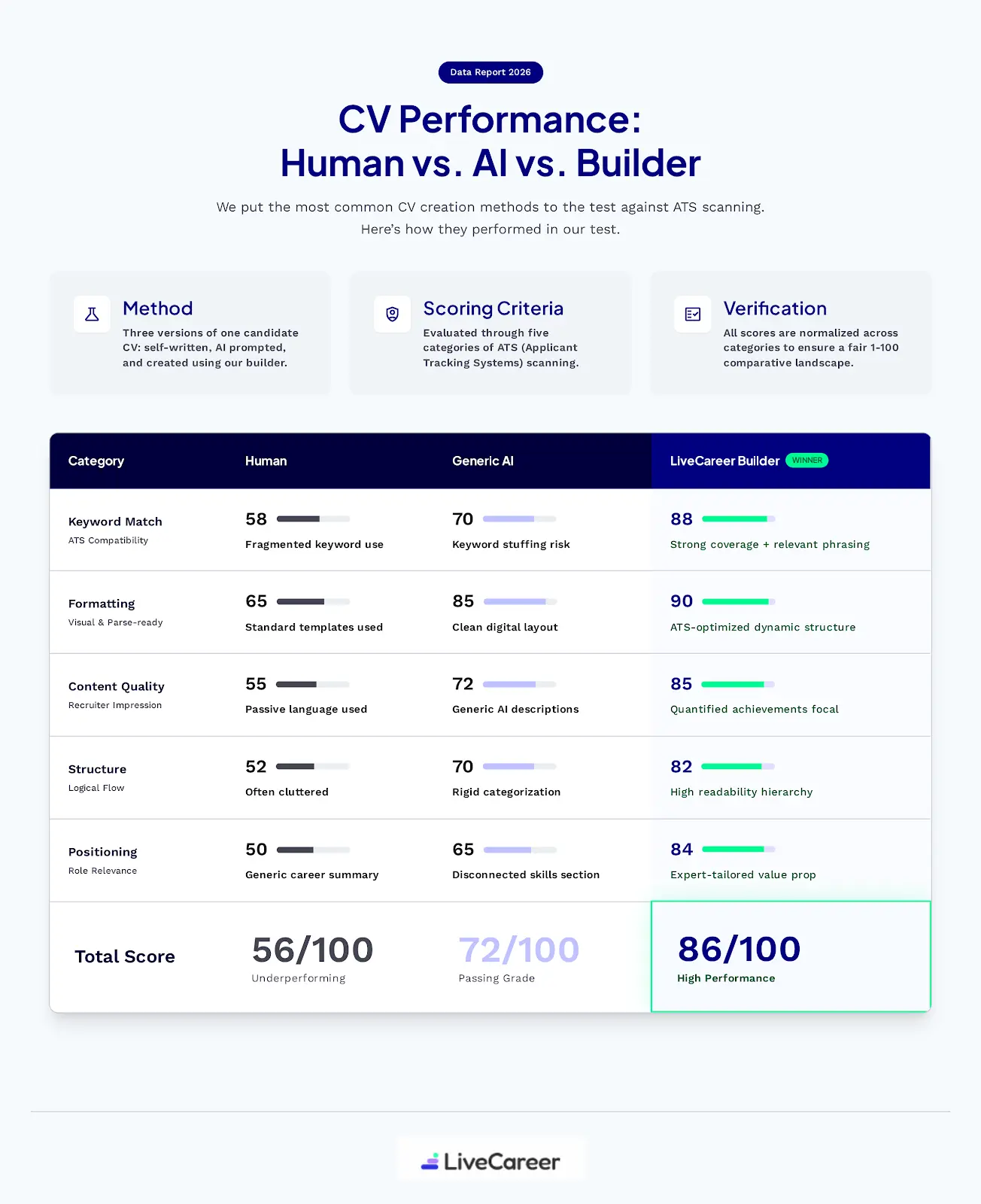
The assessment focused on five core areas: keyword relevance, formatting compatibility, content quality, structural clarity, and professional positioning. Scores were normalized across categories to create a comparative 100-point benchmark rather than relying on a single automated ATS checker.
Here is a side-by-side comparison of the overall scores:
Quick summary
- AI outperformed the self-written CV in formatting and readability, producing a more consistent and structured document.
- The builder outperformed AI in strategic areas, including keyword targeting and the prioritisation of key achievements.
- The self-written CV, while complete, scored lowest overall due to weaker phrasing, inconsistent structure, and less effective positioning.
Human vs AI shows a clear gap
The most immediate difference appeared between the self-written CV and the AI-generated version.
The AI CV scored 16 points higher, largely due to improvements in structure, consistency, and readability. Standardised formatting and stronger action verbs made it easier for both systems and recruiters to process quickly.
However, while AI improved the presentation, it did not fully address deeper issues such as positioning and keyword optimisation.
Where AI falls short
Despite its stronger performance, the AI-generated CV showed limitations in areas that directly impact screening outcomes.
According to KPMG, although 72% of people accept the use of AI, about half say they don’t feel they understand AI or how it is used. This gap in understanding is reflected in how candidates often rely on default outputs without refining them for role-specific impact.
The CV summary and overall profile also remained broad, relying on widely used phrases rather than clearly defining a specialisation. Its keyword usage lacked depth and specificity. More advanced terms that are critical for matching job descriptions were either missing or underrepresented.
In competitive roles, this kind of generalisation can reduce visibility in both ATS filters and recruiter searches.
Builder CV takes the lead
The builder-assisted CV achieved the highest overall score, outperforming the AI version by 19%.
Rather than simply improving wording, the builder influenced how information was structured and prioritised. High-impact contributions were positioned more prominently, and the CV demonstrated stronger alignment with role-specific keywords.
This resulted in higher scores across multiple categories, particularly:
- Keyword match and relevance
- Content quality and clarity
- Structure and prioritisation
In practical terms, the document was easier to evaluate quickly, both by automated systems and by recruiters scanning for key signals.
The best CV method may depend on the candidate
One of the more interesting outcomes of the experiment was that each approach seemed to solve a different kind of problem.
For junior candidates with limited experience, AI may actually provide the biggest immediate improvement. Many early-career CVs struggle less with qualifications and more with presentation: inconsistent formatting, weak phrasing, or uncertainty around professional tone. AI handles those issues remarkably well.
For more experienced professionals, however, the limitations become more visible.
Senior specialists, consultants, or highly differentiated candidates often rely on nuance: positioning, sequencing, industry context, and emphasis. Those are areas where overly generalized language can flatten expertise rather than sharpen it.
A dedicated CV builder is especially useful for candidates navigating structural complexity:
- career changers,
- multi-disciplinary professionals,
- or applicants targeting ATS-heavy industries.
Meanwhile, self-written CVs still retained one advantage that neither system fully replicated: individual voice.
Even when less polished, manually written applications sometimes communicated personality and specificity more naturally; particularly when written by candidates already confident in how they present themselves professionally.
In practice, the experiment suggested something less binary than “AI versus humans.”
Different tools solve different layers of the problem.
And increasingly, the strongest applications may come not from fully automating the process, but from combining professional judgment with systems designed to reduce friction and improve strategic clarity.
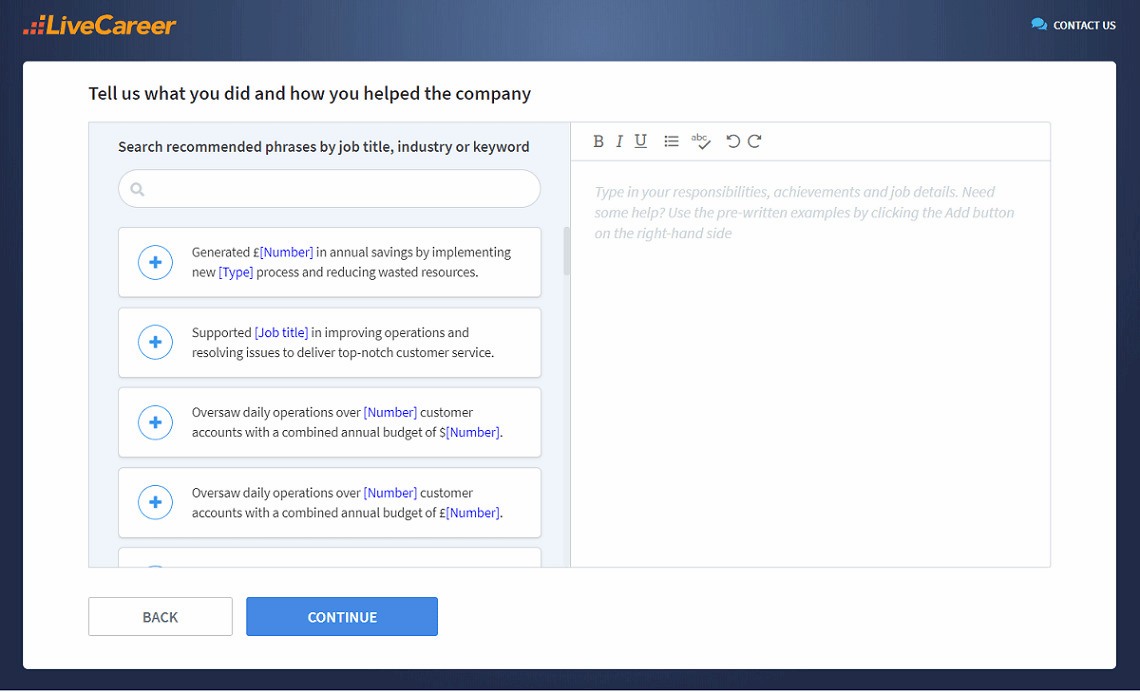
You don’t have to be a CV writing expert. In the LiveCareer CV builder you’ll find ready-made content for every industry and position, which you can then add with a single click.
Interpretation
While the scores provide a useful comparison, they reflect a specific test scenario based on typical usage. Results may vary depending on how tools are used—particularly in the case of AI, where more advanced prompting could produce different outcomes.
That said, the experiment highlights a broader trend: the gap between a CV that “looks good” and one that’s strategically effective remains significant.
How we review the content at LiveCareer
Our editorial team has reviewed this article for compliance with LiveCareer’s editorial guidelines. It’s to ensure that our expert advice and recommendations are consistent across all our career guides and align with current CV and cover letter writing standards and trends. We’re trusted by over 10 million job seekers, supporting them on their way to finding their dream job. Each article is preceded by research and scrutiny to ensure our content responds to current market trends and demand.
Sources
About the author
Patrycja Mazurczak
Patrycja is a career expert who specialises in helping you create compelling CVs and cover letters. With over 10 years of experience in content creation processes, she brings her expertise to the forefront of the industry.
Looking for a job-winning CV?
Crafting a job-winning CV is all about showcasing your unique skills and experiences. Start with a strong personal statement that highlights your career goals and achievements.
Try Our CV Builder Now